Greetings from the edge,
I spend an unreasonable amount of time watching horror movies, reading about them, and consuming more horror literature than is technically advisable. If there’s enough time left in the day, I’ll play a horror TTRPG or read a horror comic too.
The reason I bring this up is simple: I know horror when I see it.
Which neatly brings me to today’s little rabbit hole.
A while back, over at The Chop Shop, I talked about fridge horror: stories where the real terror doesn’t hit immediately, but creeps up on you hours later while you’re making tea, brushing your teeth, or trying to sleep like a normal person.
The film ends.
You move on.
Then your brain quietly taps you on the shoulder and says:
“Hang on a second…”
But this phenomenon is not limited to horror movies. Sometimes the most unsettling examples are tucked away inside nice, anodyne, pleasant family films. The sort of films with bright colours, jaunty songs, talking animals, and moral lessons you could embroider onto a cushion.
Because the older I get, the more I realise some stories aren’t just dark.
They’re delayed-action nightmares.
WALL-E (2008)
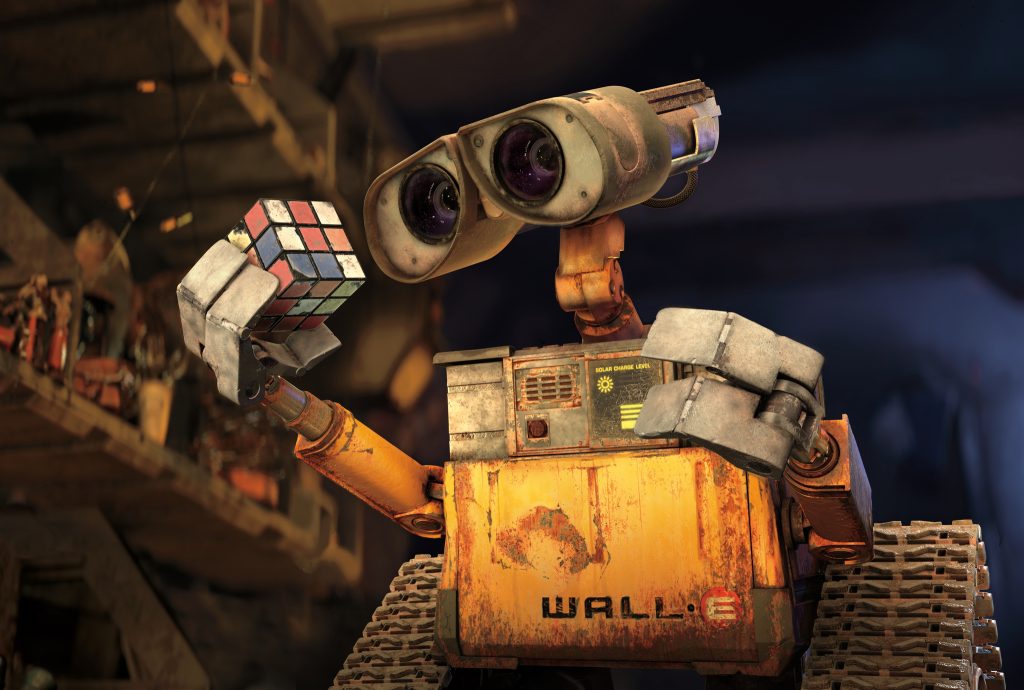
Pixar is the last place you would expect to find horror, except for that bit with the incinerator in Toy Story 3 (2010), but under the cute big-eyed robots with adorable voices, WALL-E is a dark, deeply disturbing warning.
For about half the movie, we hang out with WALL-E, the last Waste Allocation Load Lifter: Earth-Class, as he potters around the ruins of society, slowly cleaning up our mess. When EVE appears, after more than 700 years of isolation, WALL-E falls for her, even if she is a little trigger-happy. Left here, it would have just been a mildly cautionary tale about single-use plastics and sustainability.
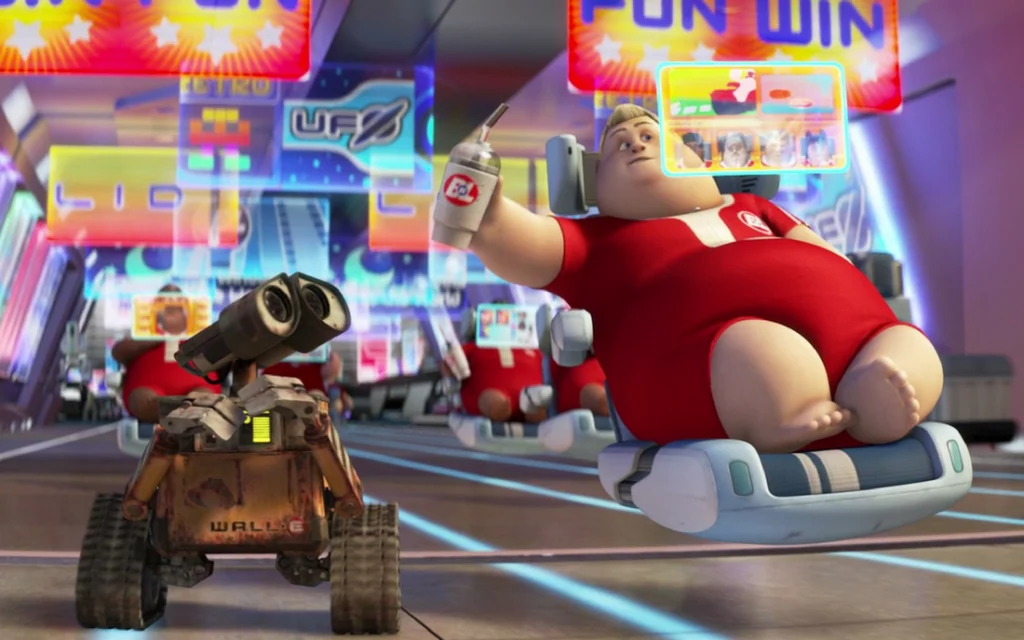
However, the really disturbing stuff happens when the humans show up. Once we are aboard the Axiom, we find that humankind has become physically helpless, mentally sedated by screens, and so thoroughly house-trained by consumerism that nobody even notices they are living in a brightly coloured coffin with cup holders.
AUTO, the villainous autopilot, is not just a rogue machine. He is the caretaker of humanity’s surrender. Directive A113 makes the whole thing even grimmer: Earth was declared unsalvageable, the clean-up operation was abandoned, and humanity was quietly kept floating in space, distracted by snacks, screens, and Buy-N-Large branding.
That is the delayed horror of WALL-E. It is not just that Earth died.
It is that humanity barely noticed.
Who Framed Roger Rabbit? (1988)
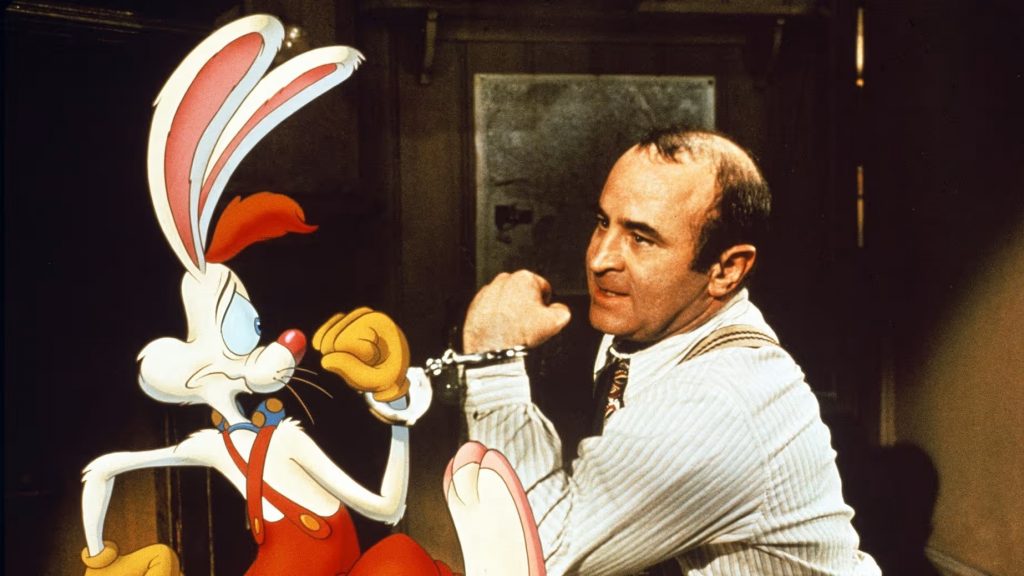
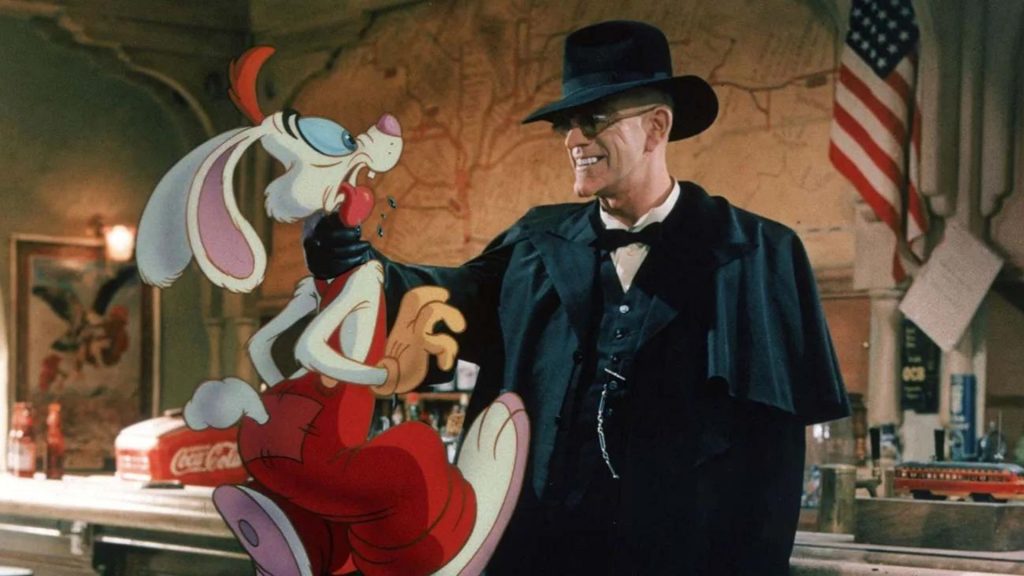
Welcome to Tinseltown, or a version of it anyway. Set in 1947, this is a Hollywood where humans and cartoon characters, known as toons, live side by side. Roger Rabbit is framed for the murder of Marvin Acme, the owner of Toontown, who was having an affair, or at least playing patty-cake, with Roger’s femme fatale wife, Jessica.
Enter our knight in a rumpled suit jacket: Eddie Valiant, a sour-tempered detective who hates toons after one killed his brother by dropping a safe on his head. Naturally.
Eddie gets roped into helping Roger prove his innocence, while the wicked Judge Doom wants to execute Roger using Dip, essentially a war crime in a barrel. It is the only substance that can permanently harm or kill the otherwise indestructible cartoon characters.
Quelle surprise, it turns out the man who dresses like a member of the Gestapo and seems worryingly enthusiastic about melting lovable animated critters is the real villain of the piece. Doom was behind not only the murder of Acme but also the death of Eddie’s brother. His end goal? Annihilate Toontown, melt all of its inhabitants into goo, and build a freeway over whatever remains.
What a prick.
The horrific elements of the film all revolve around Judge Doom, who is incidentally revealed to be a toon himself. Doom is not scary despite the cartoon setting; he is scary because he stalks the happy, colourful denizens of that world as if toons are disposable people. They are not drawings to him. They are obstacles. Things to be erased.
The Dip is essentially a family-friendly visual language for industrialised murder and ethnic cleansing. It is clothed in a clown suit, sure, but it is still horrible beneath the slapstick packaging. The poor little shoe scene proves, with almost indecent clarity, that toons can feel pain, terror, and death. Suddenly, the cartoon universe has consequences, and they are awful.
And Doom himself, apart from his murderous real estate plans, his desire to melt sentient beings into sludge, and his willingness to kill any human who stands in his way, is utterly chilling. Especially during the closing moments, when the mask slips and he turns cartoon physics into body horror: spring-loaded limbs, buzzsaw hands, dagger eyes, and a voice that sounds like childhood being fed into a woodchipper.
He does not make cartoons frightening by invading them.
He makes them frightening by belonging there.
The Truman Show (1998)

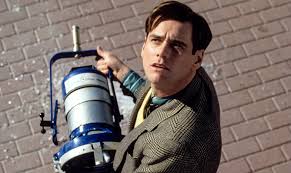
Adopted by a television studio as the result of an unwanted pregnancy, Truman Burbank has been raised his whole life in an artificial town called Seahaven, the unwitting star of a 24/7 reality show watched around the world.
Everyone and everything in Truman’s life has been stage-managed to perfection. His “loving” wife, his best friend, his colleagues, his neighbours, the weather, the traffic, the news, all of it exists to maintain the illusion. Meanwhile, the show’s creator, Christof, controls Truman’s world from afar like a puppet master with better lighting and a God complex you could see from space.
In order to stop Truman from simply heading for the horizon, Christof has installed a number of fears and emotional barriers. Most notably, he fakes the death of Truman’s father in a boating accident, emotionally scarring young Truman and leaving him terrified of water.
Truman starts to smell a rat after a series of strange events: falling studio equipment, rain that only falls on him, radio chatter tracking his movements, and the sudden reappearance of his supposedly dead father. Eventually, he starts putting two and two together and makes a bid for real freedom, only to be blocked at every turn by the production.
Finally, Truman manages to get onto a boat and sails away from Seahaven, overcoming his fear of water in the process. Christof tries to stop him, almost fatally, by creating a violent storm that nearly drowns him. Truman reaches the edge of the soundstage and finds the exit. There, Christof speaks to him directly, admits the truth, and tries to persuade him to stay, claiming that the real world is no better than the fabricated one he has built.
Truman refuses, says his catchphrase, bows, and walks out into the real world.
Viewers celebrate briefly, then casually change the channel.
There are any number of ways this film can be described as horrific. Everyone in Truman’s life, up until the moment he escapes, has been using him. His wife doesn’t really love him; she manages him. His best friend may feel guilty, but he still lies to him on cue. His neighbours are extras. His memories are content. His trauma is backstory. Everyone in his life has an agenda, and none of those agendas include Truman having a real choice.
He doesn’t have a past. He has previous seasons.
He doesn’t have privacy. He has camera angles.
He doesn’t have relationships. He has recurring cast members.
And he certainly doesn’t have a future, because once he gets out, the tabloids will track his every movement like me with one eye on the pizza tracker app.
Poor Truman never had a real, normal life, and thanks to Christof, he probably never will. Christof did not just steal his childhood, his family, his privacy, and his sense of reality.
He copyrighted them.
Jurassic Park (1993)
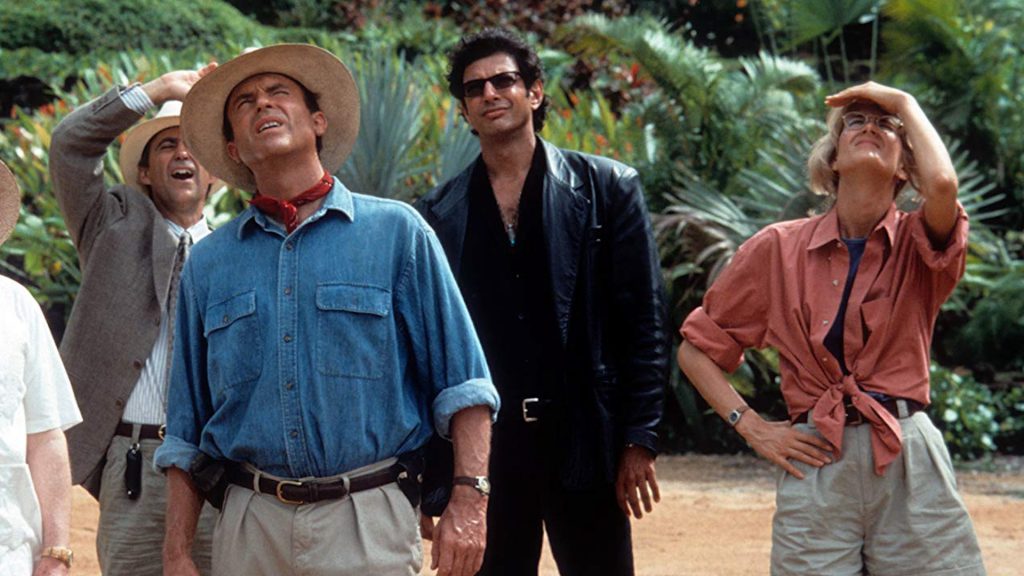
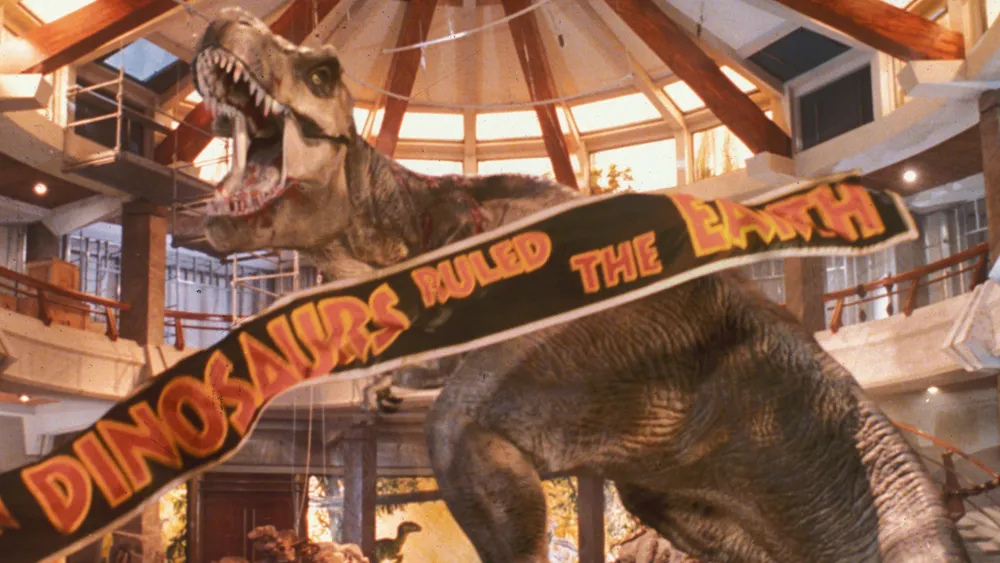
John Hammond, billionaire industrialist, in a time when billionaires apparently had better things to do than pick fights on social media, has built a dinosaur theme park on the Edenic island of Isla Nublar. Using prehistoric DNA extracted from mosquitoes preserved in amber, Hammond and his crack team of Frankenstein-esque scientists have brought dinosaurs back from extinction. They plugged the gaps in the genetic code with frog DNA and all-purpose plot-hole filler, and before you know it, a hungry velociraptor is eating a worker’s face like it’s Taco Tuesday in the lunchroom.
Because of this, the investors have become a little wary and ask for a group of experts to inspect the park before it opens to the general public.
Hammond brings in palaeontologist Alan Grant, palaeobotanist Ellie Sattler, and chaos theorist Ian Malcolm, along with lawyer Donald Gennaro. Hammond’s grandchildren, Lex and Tim, also join the visit, because what’s a family blockbuster without a little reckless child endangerment?
The park seems marvellous at first, literally awesome, with a peaceful Brachiosaurus majestically munching on trees. But the cracks soon start to show. The dinosaurs were engineered to be all female, supposedly preventing them from breeding. This would have worked, were it not for a tricky little helix in the frog DNA that allows some of them to change sex and reproduce.
Meanwhile, disgruntled programmer Dennis Nedry shuts down the park’s security systems so he can steal dinosaur embryos for a rival genetics company. With the heavy-duty electric fences disabled, the Tyrannosaurus rex escapes, kills the lawyer, injures Malcolm, and introduces everyone to the exciting new field of “being lower on the food chain than previously assumed.”
Grant escapes with Lex and Tim, while Nedry is killed by bad choices and karma in the form of an acid-spitting Dilophosaurus.
Hammond and the remaining survivors attempt to restore power, but the shutdown has the knock-on effect of releasing the velociraptors, who kill one of the island’s technicians and the gamekeeper, Muldoon.
Grant, Sattler, Lex, and Tim make their way to the control room, where Lex uses her preteen hacking powers to crack the million-dollar security system, restore the power, and call for rescue. On their way out, the group is cornered by the raptors, but the T. rex has apparently taken a level in ninja and unexpectedly attacks, killing the raptors and allowing the humans to flee with all their soft, squishy internal organs intact.
The horror of Jurassic Park is both immediate and subtle. There is the obvious terror, of course: enormous prehistoric murder-lizards with teeth the size of carving knives, and that little part of your mind that kicks in and asks, “Just what would it feel like to be eaten alive, anyway?”
But the delayed horror is arguably worse.
Grant finds hatched eggs in the wild, proving that the dinosaurs have been breeding long before anyone realised. This means there may already be more raptors loose on the island. It also means Hammond’s entire containment strategy was a polite fiction with a gift shop attached.
And, I would argue that Nedry, although he was a greedy, selfish dick who got exactly the ending he deserved, may have accidentally prevented a much, much worse disaster.
Think about it. Without Nedry and his nefarious money-grubbing actions, the same failures would almost certainly have emerged later. The breeding problem would still exist. The park’s overreliance on automation would still exist. The animals would still be smarter, stronger, and less contained than anyone wanted to admit.
Only next time, the island would not contain a handful of experts and two children.
It would be full of tourists.
Families. School trips. Honeymooners. Toddlers with dinosaur plushies. Parents taking photos. Children queuing for ice cream. Hundreds, maybe thousands, of people wandering around a beautifully branded deathtrap, clutching souvenirs while the fences quietly stopped being fences.
Nedry did not save the day.
But he may have made sure the body count stayed small enough to fit inside a movie.
Big (1988)

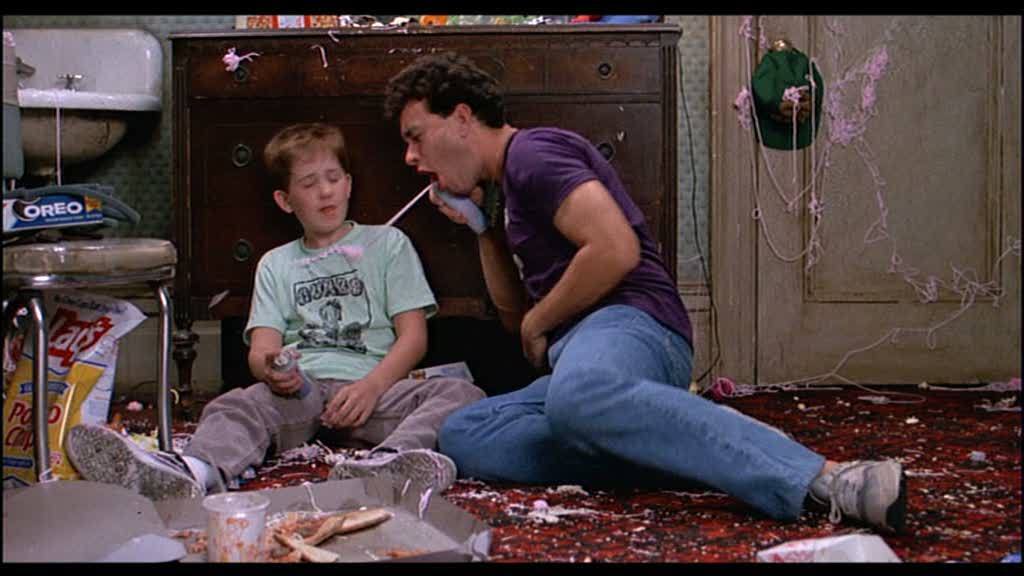
Josh Baskin is a normal thirteen-year-old kid, quite literally wishing his childhood away for a chance to be “big” after missing out on going on a ride with his crush because he was too short. He comes across a mysterious fortune-telling machine called Zoltar, makes his wish, and wakes up the next morning as a fully grown adult.
Josh’s mum does not take this very well, pulling a blade on the complete stranger who tries to show her a birthmark on his arse while claiming to be her thirteen-year-old son, when he is clearly a grown-ass man. Josh flees the family home and runs away to New York with the help of his best friend, Billy, hoping to track down the vanished Zoltar machine.
While stuck in his thirty-year-old body, Josh gets a job working for a toy company. This ends very well for him because, as a genuine child, his understanding of what makes toys fun impresses the owner, Mr MacMillan. He gets promoted, his adult life takes off, and he forms a romantic relationship with Susan, a fellow executive. Slowly, he starts to drift away from Billy and from his real childhood.
Josh eventually comes to his senses and realises that being a kid is awesome. Billy finds the Zoltar machine, and Josh runs to it, ditching an important presentation at work. Susan follows him and finally understands that he is not childlike because he is quirky or immature. He is childlike because he is a child. Josh wishes to hit the big reset button, says goodbye to Susan, and return home as a thirteen-year-old to be reunited with his family and Billy.
The horror in this one is buried under a lot of cornball ’80s movie fluff, but dear reader, consider this: Josh now has to wait at least ten years before he can regain even a semblance of the freedom he briefly tasted as an adult. He has had a job, money, independence, his own place, romantic experience, and a glimpse of adult life. Now he has to go back to homework, curfews, school corridors, and crushing on girls who, quite frankly, do not know he exists.
That is not just awkward. That is psychologically radioactive.
Also, what of poor Susan? By the end of the movie, she is fully aware that the man she took to her bed was actually a thirteen-year-old boy. Yes, he happened to look like Tom Hanks, which is doing a heroic amount of heavy lifting for the film’s breezy tone, but he was still very much underage. She has not had a whimsical office romance. She has been dragged into a magical safeguarding nightmare.
So, enjoy your therapy, Susan.
Lastly, does it bother anyone else that an object capable of granting actual wishes and warping the fabric of reality on the whim of a tween is just floating around out there? All it costs to really screw up the universe is a quarter and a badly worded wish.
So there you have it, my friends: five films that, underneath the sunshine, are pure radioactive nightmare fuel. Don’t forget, horror is a state of mind. Just ask any parent who has ever been exposed to a Peppa Pig marathon.
See you in the margins,

Leave a Reply