
Rambles & Whimsy is a creative blog packed with horror articles, strange history, true crime, movie reviews, tabletop RPG advice, writing updates, science curiosities, and darkly funny essays. From cosmic horror and cursed objects to Dungeons & Dragons tips and behind-the-scenes looks at original fiction, Rambles & Whimsy is a cabinet of stories, curiosities, and creative oddities for readers who like their facts fascinating and their fiction a little strange.

Crying is a Free Action
Crying is a Free Action is my corner of the internet for all things tabletop role-playing.
Here you’ll find thoughts on running games, building worlds, telling better stories at the table, and surviving the occasional rules argument. I write about Game Mastering, player habits, storytelling tricks, and the strange, wonderful chaos that happens when a handful of people sit down with dice and imagination.
Some posts are practical advice. Others are reflections from behind the GM screen after many years of rolling dice and making things up as I go.
Whether you’re a veteran GM, a curious player, or someone who just loves the idea of collaborative storytelling, you’re welcome at the table.
Grab your dice, check your character sheet, and remember:
Sometimes the only thing left to do… is cry.
The Chop Shop
The Chop Shop is where things get a little darker.
This corner of Rambles & Whimsy is dedicated to horror in all its strange and wonderful forms. Here you’ll find essays on unsettling history, disturbing curiosities, eerie folklore, and the stories behind some of the genre’s most fascinating creations.
Sometimes we’ll dig into real-world horrors that are stranger than fiction. Other times we’ll explore the films, books, monsters, and ideas that make the genre tick.
If it’s creepy, macabre, grotesque, or just plain fascinating, it probably belongs here.
So step inside, if you dare. The lights are low, the scalpel is sharp, and there’s always something interesting on the table.
Rambles & Whimsy
Rambles & Whimsy is my little corner of the internet where curiosity gets to stretch its legs. Here you’ll find odd stories, strange history, creative musings, and the occasional rabbit hole that was simply too interesting not to follow.
Some posts explore writing and storytelling, others dig into peculiar facts, folklore, forgotten people, or the weird corners of culture that make you pause and think, “Huh… I didn’t know that.”
Think of it as a cabinet of curiosities in blog form. A place for ideas that don’t quite fit anywhere else, but are too fascinating to ignore.
If you like stories, strange trivia, creative thinking, and the occasional bit of delightful oddness, you’re in the right place.
Pull up a chair, pour yourself a cup of tea, and have a ramble.

Stop Building Worlds, Start Causing Problems
Every GM loves a good lore bible. Ancient wars, dead gods, noble bloodlines, sacred forests, suspicious goat migrations; lovely stuff. But when your players arrive, they probably aren’t asking about the nine-hundred-year history of the village.
They want to know where the inn is.
This article is about turning worldbuilding into something playable. Not by throwing your lore away, but by giving it teeth. A village does not become interesting because it has history. It becomes interesting when the priest goes missing, the well starts whispering, the mayor is lying, and someone is making money from everything staying broken.
Inside, we look at how to build problems your players can actually grab, question, break, solve, worsen, or accidentally blow up.
Because a village full of names is a database.
A village full of pressure points is a game.

Horror Has a Class Problem
Horror has always known how to spot the rich and the poor before anyone spills a drop of blood. From murderous aristocrats and immaculate penthouses to rusting cars, bad teeth and houses at the end of dirt roads, class is often written into the monster long before the monster acts. But why does wealth get a motive while poverty gets a chainsaw?
When the Dice Say No
What happens when the dice say no?
Too often, the answer is: nothing. The rogue fails to pick the lock, the ranger loses the trail, the bard can’t sway the guard, and suddenly the game is staring at a dead end with all the charm of a smug brick wall.
This article is about making failure useful. Not kinder. Not softer. Useful.
We look at how failed rolls can move the story, shove the party sideways into fresh trouble, or explode dramatically when the stakes are high. From botched lockpicks and awkward bargains to traps that wake up and cursed idols that become everybody’s problem, this is a practical guide to keeping the game alive when the dice betray you.
Because failure should still have teeth.
And if nothing interesting happens when the roll fails?
Don’t roll.
Horror Tropes Under the Knife
The Harbinger: The Lunatic Who Was Right
Every horror story has someone who knows what is coming.
They are the wild-eyed stranger beside the road, the traumatised survivor nobody believes, or the obsessive researcher shouting into the digital void. They warn the heroes, get dismissed as mad, and are inevitably proved right by a rapidly expanding pile of corpses.
This instalment of Horror Tropes Under the Knife examines the Harbinger: horror’s battered Cassandra, doomed to see the nightmare clearly and cursed to be ignored.
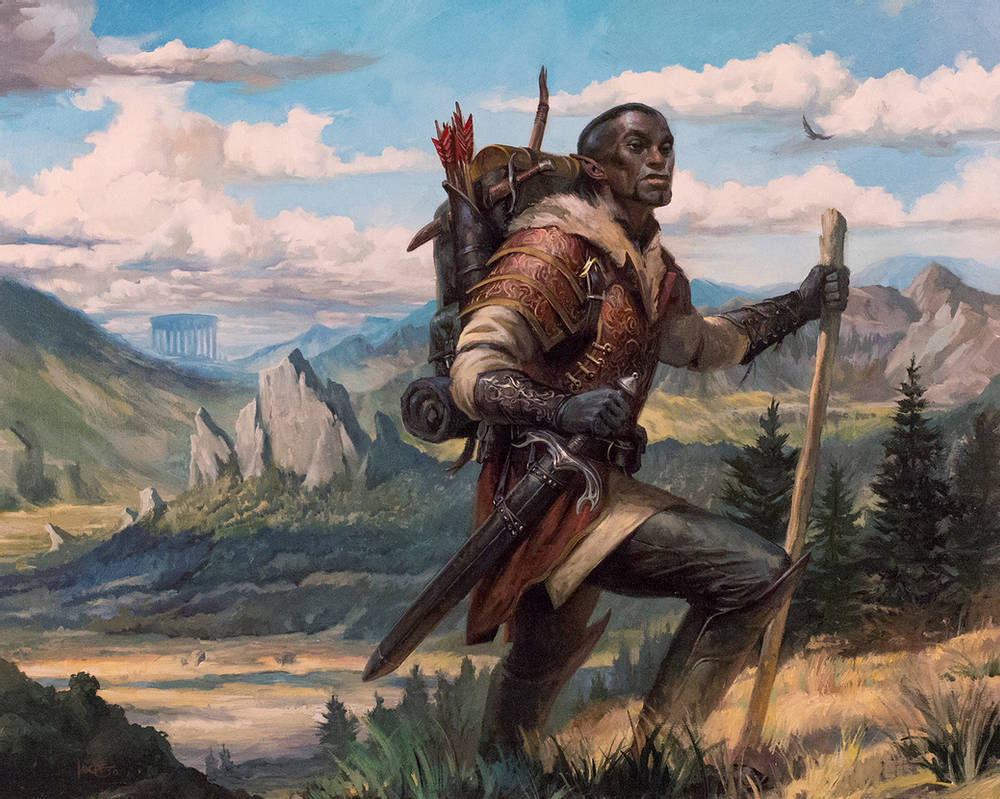
There and Back Again
Too often, travel in fantasy RPGs becomes either a hand-waved loading screen or a mandatory wolf tax. But the road should be more than dead space between the tavern and the dungeon. It should reveal the world, test the party, foreshadow danger, create choices, and make the destination feel earned.
In this article, we look at how to make travel exciting without turning it into a hex-crawl tax return, from meaningful random encounters and campfire moments to consequences that pull on boots and start walking toward the players.
Also included: a big d100 table of travel encounters that aren’t just wolves.
Probably.

7-09-26 Grasshopper Glacier, in Montana, was named for the grasshoppers that can still be seen frozen in the ice.
26-09-26 Coyotes pair for life.
25-09-26 In Britain, the Witchcraft Act of the early 1700s identified black cats as dangerous animals to be shunned.
24-09-26 In Idaho, you may not fish on a camel’s back.
23-09-26 A Handi bride wears a red sari.
22-09-26 The name ‘Beelzebub’ means ‘lord of the flies’ in Hebrew.
21-09-26 The ancient Norse associated mistletoe with their goddess of love (Freyja), leading to the tradition of kissing under the mistletoe.
20-09-26 Cambridge University was established in 1209.
19-09-26 In World War II, it cost the Allies about $225,00 to kill one enemy soldier.
18-09-26 Bamboo can grow to the height of a two-year-old child (39 inches/91 cms) a day.
17-09-26 Witchs wre never burnt in America and England… they where hanged instead.
16-09-26 Jacqueline Susann’s best-selling novel ‘Vally of the Dolls’ was originally titled ‘They Don’t Build Statues to Businessmen’
15-09-26 Lord Alfred Tennyson wrote a 6,000 word epic poem when he was just 12 years old.
14-09-26 There are 100 billion neurons in the human brain with each one linked to hundreds of others, and dispit the fact that it only accounts for around 2% of your body weight it is the most complex and orderly arrangement of matter in the known universe.
13-09-26 There are about 2 million sweat glands in the human body (250,000 of which are in your feet). yopu lose around 540 claories with every liter of sweat.
12-09-26 You can detect the wing of a bee falling on your cheek from a hight of 1cm
.11-09-26 You shed about 1.5lbs of skin each year, but if you where to collect all your skin in one mass it would weigh 6lb, if you then where to spread out your skin, assuming you wiegh around 150lbs/68kg, and spread it out flat it would cover approximately 20 square feet.
10-9-26 It really does take more mucles to frown (42) than to smile (17) it is only partially true that it takes 15 to flip someone off, but it is a fact it takes 72 to shout ‘Fuck it!’
09-09-26 Blood turns brown when mixed with bleach because bleach chemically oxidises the iron found in the haemoglobin of red blood cells.
08-09-26 an average man muscles comprise about 40% of their body weight, a womans comprise about 30% of theirs.
07-09-26 The ancient Romans used gold salves for the treatment of skin ulcers. Today gold leaf plays an important role in the treatment of chronic ulcers.
06-09-26 The Spanish Flu, unlike most flu viruses hit the young and healthy the hardest. The pandemic killed 20 to 40 million pepole in 1918. Compatrivly about 13 million died in the battles of World War I and approx 15 to 35 million who died of Covid-19.
05-09-26 Six-year-olds laugh an average of 300 times a day, adults only laugh 15-100 times.
04-09-26 On some pacific islands, shark teeth are used to make skin tattoos.
03-09-26 Roughly one-third of Greenland, the worlds largest island, is national park.
02-09-26 Babies born in May are, on average, 200g heavier. This could be due to the extra sunlight, and therefore vitamin D, that mothers are exposed to. The weight of a foetus increases by around 2.4 billion times in 9 months.
01-09-26 28 grams/one ounce of gold can be drawn to 69 kilometres/43 miles long.