Horror unites us. It gives us a common enemy, be that a trans-universal embodiment of evil dressed as a clown, a dream demon, or the personification of anti-premarital sex enforcement. Horror puts our backs squarely against the wall, with the monster in front of us and only one way out, which unfortunately is normally through the masked behemoth.
Sometimes it goes even further, providing us with handy shorthand so we know our Final Girls from our Harbingers: neat and tidy tropes that assign roles to the major players. There are times, though, when this sorting of people into boxes does not unite us at all. Instead, it divides us along one of humanity’s oldest battle lines: the haves and the have-nots.
Horror adores portraying the wealthy as decadent parasites, bored socialites and murderous aristocrats. Those occupying the higher social strata are louche, spiritually vacant and almost invariably members of a secret society whose dress code appears to be black tie and human sacrifice. They belong to families whose unearned, inherited wealth has fermented into moral silage.
You only need to look at Ready or Not, Society, Would You Rather and The Masque of the Red Death, not to mention nearly the entire Gothic tradition. Wealth itself becomes a kind of body horror. Too much comfort has left these people spiritually swollen and morally emaciated.
But do not imagine that an anaemic bank balance will save you from the scorn of horror writers. The genre is just as eager to treat poverty as a form of contamination: the isolated rural family, the filthy council estate, the inbred hillbillies and the suspicious locals who stop talking the moment an outsider enters the pub.
Poverty is often coded through bad grammar and worse teeth, dirty clothes, crowded homes and a palpable hostility towards outsiders. Horror cinema may make a show of sympathising with the working class, but it also frequently turns working-class bodies into warning signs.
In horror, class is seldom merely a person’s economic position. It is a diagnosis, a warning label and often a clue to the kind of monster the film expects them to become.
Class as Costume
Horror often abandons all subtlety when coding the divide between rich and poor.
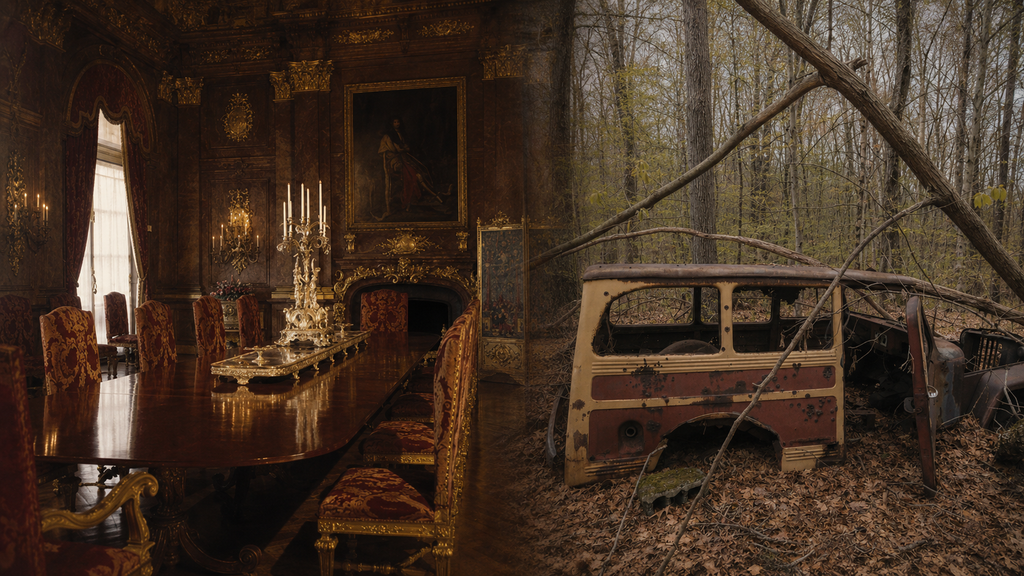
If we get an establishing shot of a mansion while soft classical music plays, servants dressed in severe black formalwear attend to the every whim of an impeccably dressed family dining beneath an art collection that would give a Sotheby’s appraiser palpitations, then we know we are dealing with extremely wealthy people.
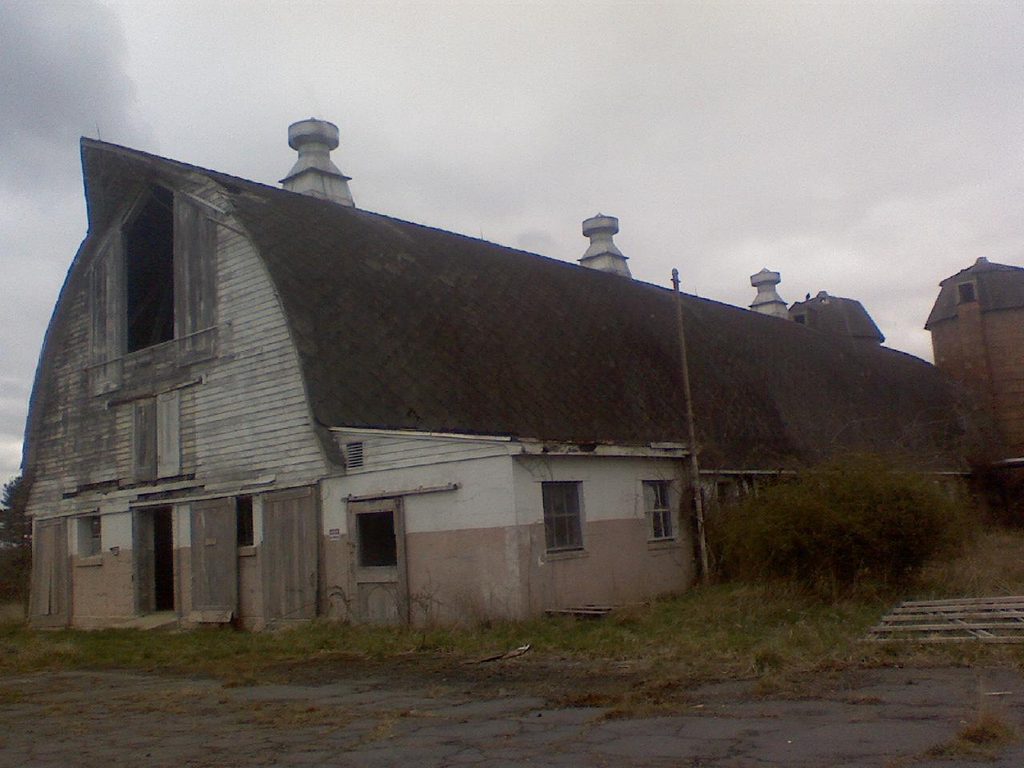
At the other end of the social strata, we might see a dilapidated home with several cars on the drive: too old to be new, but neither old enough nor in good enough condition to be considered classics. Its inhabitants wear dirty, threadbare clothes, possess teeth resembling vandalised tombstones and communicate in basic syntax, often with grammar that would make an English teacher abandon the profession entirely.
The important thing is that we see all these details before anyone has actually done anything wrong.
Before the first chainsaw revs, before the first twisted parlour game begins and before the bodies start stacking up, we already know what flavour of monster we are dealing with and roughly where they sit on the spectrum between Patrick Bateman and the Sawyer family.
None of these details demonstrates that a character is monstrous. They merely dress them for the part, handing the audience a bundle of class-coded evidence before the axe has even fallen.
Eat the Rich: Wealth as Moral Rot
Nobody in a horror movie, ever, becomes rich-filthy rich-without making some pretty morally filthy decisions along the way.
Wealth is not treated merely as a comfortable bank balance, an ancestral home or an expansive wine cellar. Wealth is often treated as evidence, evidence that somewhere under the polished parquet flooring, behind the portraits of great-grandfather, and beyond the locked door in the east wing, there is usually a body, a bargain with a certain gentleman with a sharp goatee, or an underclass being quietly and efficiently ground into paste.
In Ready or Not (2019), the Le Domas family’s inherited wealth is maintained through hard work and shrewd investment… just kidding, it’s down to literal human sacrifice. The Le Domas family fortune began with a supernatural bargain with an entity that is legally distinct from Satan, but at least shares his PO Box Number. And these latter-day Fausts are expected to fulfil their end of the bargain. Family tradition becomes the socially acceptable term for organised murder, because apparently even satanic blood pacts sound respectable if you send out a nice gilt-edge invitation on tasteful ivory coloured paper.
When we meet Grace, she thinks she is marrying a man, only to find that she has wed into a system. She is not targeted because she has committed some heinous sin or wronged anybody; she is targeted because she is an outsider, and is therefore disposable when inherited privilege feels threatened.
Behind the jokes and detonating aristocrats, a nasty truth lies: the Le Domas family are not preserving tradition because they genuinely value it. They preserve it because tradition protects their security and wealth. Whatever mild distaste they may feel about hunting down a newlywed through seemingly never-ending corridors and halls vanishes the very instant their own survival and social position are in jeopardy.
No matter how much they squabble, require chemical stimulation, or apologise, they still load their crossbows.
Brian Yuzna’s Society (1989) has even fewer fucks to give. In it, the wealthy are not metaphorically feeding on the poor; they are physically consuming them in an orgy of body horror, misplaced limbs, rubberised flesh, and upper-class entitlement. The film takes the idea of the rich living off everyone beneath them and drags it kicking and screaming into the dining room without any trousers on.
There is no room for subtext here; the subtext has already gotten drunk and is in a cab on the way to the Electric Ballroom in Camden.
The truly grotesque climax works because it gives physical manifestation to an old superstition: the rich are not simply separate from ‘ordinary’ people, but they are fundamentally different. They speak differently, live differently and protect each other through social connections invisible to those ‘others’ born outside of their circle. Their privilege is not simply an economic advantage. It is biological, tribal and deeply predatory.
The wealthy do not merely possess more; in Society, they have become something else entirely.
That same fear takes a colder and more recognisable form in American Psycho (2000). Patrick Bateman is not only an affluent man who may or may not be a serial killer (it’s that kind of movie). He is very much a product of the world that he inhabits, a world in which status, brands, restaurant reservations and (misspelt) business cards have replaced personality.
Bateman can forensically analyse a business card at fifty paces, describe the discography of Huey Lewis and the News in exquisite detail, but he is utterly incapable of holding anything resembling a normal human connection. Everything about the man, his immaculate suits, obsessive personal grooming routine and expensive apartment, is not a signifier of his identity; it is a façade erected to hide its complete absence.
His peers are scarcely any better; wearing the same clothes like it’s a kind of uniform, frequenting the same restaurants as though they are territorial hunting grounds, and so generic that they often mistake one another for completely different colleagues. Everyone is treated interchangeably because nobody pays attention to anyone beyond the labels attached to them.
Even Bateman’s crimes, real or imagined, risk disappearing into this vacuum. In a way, it doesn’t matter if his crimes are real or not; what matters is that the world is too self-absorbed to notice. Violence becomes just another form of consumption, another appetite exercised by a man who has been taught that desire itself is justification for whatever awful act he may commit.
Bateman simply belongs to a social stratum that believes that possessing the right objects is more important than possessing a soul; that is what makes him more dangerous than a simple killer in a nice suit.
Other times we see the same suspicions in different shapes. The Menu (2022) presents the wealthy as consumers who believe paying for an experience gives them ownership over the people who create it. The Masque of the Red Death (1964) locks aristocrats inside a fortress where luxury becomes insulation from suffering, until suffering eventually knocks on the door. The People Under the Stairs (1991) gives us landlords who make Peter Rachman look like a saint. High-Rise (2015) turns class hierarchy into architecture and lets civilisation collapse floor by floor. In Land of the Dead (2005), the wealthy retreat into a luxurious tower while the poor survive in the streets below, apparently believing the apocalypse has made the neighbourhood more exclusive.
The brushstrokes may change, but the picture remains the same.
Why does horror find wealth so shady?
Part of the answer is that extreme wealth invites suspicion of hidden exploitation. Horror looks at someone possessing more than they could ever possibly need and immediately asks: who really paid the cost? Whose labour built the mansion? Whose eviction cleared the land? Whose blood and sweat keep the place spotless?
In horror, short of a monkey paw, fortunes do not simply pop into existence from nowhere. The money is inherited, extracted, protected and justified. The genre then takes these processes, gives them a big ritual knife, a formal dining room, and a tasteful string quartet.
There is something very revealing about how a rich monster is allowed to behave. They are articulate to a fault; they explain themselves and their motivations. They have their own philosophies, ideas, and traditions. They discuss taste, sacrifice, tradition and survival while a faithful retainer fills their glass.
In short: the rich monster gets to monologue.
They are corrupt, murderous, and rotten to the core, but they are never denied complexity. Horror is more than happy to condemn them, but it will not deny them the opportunity to speak in full sentences.
Wealth may well have despoiled them, but it has also purchased them the dignity of an explanation.
Fear the poor: Poverty as contamination.
If the rich are viewed with suspicion, and if we are honest, a little envy, and asked whose blood has paid for their dragon’s hoard of wealth, we traditionally look at extreme poverty and ask a different question; usually something along the lines of ‘What the hell happened to them?!”
Horror has a nasty habit of treating poverty not only as an economic condition, but closer to something like contamination. Rural isolation? That would be a byword for backwardness. Poor housing becomes moral decay. Disability or deformity becomes physical manifestation of moral degeneration, and before long someone is running full pelt through the forest, wearing overalls and suspiciously sharp agricultural equipment with murder explicitly in mind.
This brings us to perhaps the most explicit example of this in Wrong Turn (2003).
The film wastes no time asking why its antagonists live as they do; it assumes that it doesn’t need to. The character design and their environment have already done the narrative heavy lifting. The dilapidated hovel they live in, surrounded by abandoned vehicles and filled with scavenged (and often blood-stained) possessions, as well as the complete absence of anything resembling a municipal waste collection service, tells us all that we need to know: that we are beyond the reach of ‘respectable’ civilisation.
The result of generations of inbreeding, they are poor, disabled, and minimally verbal. All of this is mixed into a cocktail and presented as symptoms of the same underlying condition: Savagery.
Three Finger and his kin do not become monstrous because they have been economically abandoned, socially excluded or failed by the world outside of their forest. They just are monstrous. Their bodies function as Exhibit A.
That matters because Wrong Turn isn’t really examining the stereotype of rural poor; it’s using that stereotype as shorthand and relying on the audience to already understand the language:
Broken-down house? Check.
Limited vocabulary? Check.
Bad teeth? Double check!
Generations apparently ignored by every branch of government since Eisenhower? It’s chainsaw time!
It is darkly ironic that, despite being so economically powerless they couldn’t afford the down-payment on a decent toothbrush, the clan are presented as an existential threat to the comparatively affluent outsiders wandering into their territory. Poverty doesn’t make them sympathetic or vulnerable; it makes them dangerous.
In Wes Craven’s original The Hills Have Eyes (1977), the story plays with very similar ideas, albeit in more interesting ways.
The Carter family is the archetypal respectable, all-American nuclear family travelling across the desert when they encounter a different family living by very different rules, beyond the fringes of conventional society. The two increasingly become distorted reflections of each other, albeit with one side having station wagons, suburban manners and family photo albums, while the other has cannibalism, scars, and mutations.
The impoverished family are coded through ravenous appetite, horrific violence, deviant sexuality, physical difference and a primitive tribal loyalty. They are the corporeal manifestation of what happens when respectable society’s structures of civilisation vanish.
Except, as the film develops, those distinctions begin to erode.
Because violence becomes not only an option but necessary for survival, the respectable family becomes increasingly violent and savage. Civilised behaviour turns out to be less a matter of intrinsic moral fibre than a luxury enjoyed by those who have never had it tested in any meaningful way.
All of this makes The Hills Have Eyes more complicated than a black and white story about ‘scary poor people’. It still draws heavily on grotesque stereotypes of isolated rural poverty, but it also asks how substantial the difference between its two principal families really is once the rules vanish.
Then there is a small, obscure film called The Texas Chainsaw Massacre (1974) which complicates things even further.
Leatherface and family are, without a moment’s hesitation, monstrous; that said, they are not without social history and context. They come from a world of slaughterhouse labour, an industry transformed by mechanisation and industrial change. Their skill is now obsolete; the economy has moved on without them, and what remains is a family living amid the social wreckage.
It’s somewhat unfortunate then that they have a habit of turning passing motorists into home décor.
The film therefore occupies an uncomfortable position. It adds context to the killers while at the same time transforming impoverished rural workers into grotesque icons of horror. They have been discarded by modernity as obsolete, but instead of vanishing quietly into the night, they remain, sitting on a pile of bones, waiting for the people who benefited from that same modernity to blunder blindly into their home.
There is almost something classically gothic about that; the abandoned past refusing to stay dead.
The family, not yet called the Sawyers on screen, becomes an avatar of human detritus, left behind by economic progress. They are horrifying not only because they kill people, but because they represent a community whose economic usefulness has perished.
The shiny new world has passed them by, driven straight over them, and now they would very much like to have you for dinner.
From Hillbillies to Hoodies.
Here in Britain, we looked at the trope of rural poverty and decided it needed more rain and knockoff tracksuits.
The American tradition gives us isolated, mountain-dwelling clans, desert cannibals, and families that live far beyond the reach of civilisation. British horror developed its own version of the same anxiety: the feral working-class youth.
Eden Lake (2008) is possibly the clearest example, with protagonists Jenny and Steve, a respectable professional couple, simply trying to enjoy a weekend beside an idyllic lake. Their own personal nemeses are a group of working-class teenagers who are loud, coarse, aggressive, territorial and increasingly violent.
Initially, the conflict seems to be between two groups of individuals, then the film widens its lens.
These thuggish kids are not an aberration from their community. The adults are very much implicated as well. The parents are hostile, self-protective and ultimately capable of exactly the same brutality as their offspring. No reassuring moment arrives when a responsible adult appears and restores order because, within the film’s logic, the entire social environment is polluted.
This is where Eden Lake becomes exceptionally unpleasant; the fear is no longer that some teenagers might hurt you, the fear is that you have entered a place where the normal rules do not apply, populated by an entire community whose values are fundamentally incompatible with your own.
The hoodie becomes Britain’s answer to the hillbilly, an old foe reskinned for a new audience, with the same anxiety.
Both figures are positioned outside respectable middle-class society, and they are frequently presented as dangerous precisely because of that exclusion. Their speech, clothes, homes and behaviour become visual warnings, like the warning colours of a poison dart frog. The audience is told to recognise the threat before the characters have sufficient evidence to do so.
This is where horror’s treatment of poverty becomes much harder to defend than its treatment of wealth.
Patrick Bateman is frightening because the film shows us what his world has made of him.
A killer from Wrong Turn is frightening because the film shows us his scary lack of dental work.
That does not mean every film featuring violent rural characters or working-class antagonists is classist automatically. The Texas Chain Saw Massacre clearly has more going on beneath its filth-encrusted fingernails than simple contempt for the rural poor, while The Hills Have Eyes very deliberately destabilises the distinction between its supposedly ‘civilised’ and ‘savage’ families.
Other films are less interested in interrogation than recognition.
They rely upon the audience seeing poverty, isolation, poor education or working-class culture and instinctively understanding that these things belong on the wrong side of the tracks, and the wrong side of the horror equation.
Which leaves us with an awkward question: when horror shows us the frightening poor, is it exploring middle-class fear? Or is it asking us to share in it?
The Difference Is Who Gets to Speak
There is another, finer distinction in the way horror treats monsters at opposite ends of the economic spectrum: who gets to howl at the sky, and who gets to explain themselves.
In American Psycho, Patrick Bateman talks a lot, like more than a coked-up breakfast DJ with an espresso drip and six minutes of airtime left to fill. He pontificates about music, fashion, restaurants, business cards, status and the tiny distinctions between men who, to everyone outside their social circle, are practically interchangeable.
The Le Domas family in Ready or Not argue about tradition, responsibility, survival and whether brutally murdering a newlywed is really necessary if everyone could just chill out for five minutes. (insert hackneyed in-laws joke here).
In The Menu, the wealthy guests constantly articulate their boorish entitlement, whether they realise it or not. They have opinions, tastes, philosophies and carefully cultivated identities. Even as the film condemns them, it lets them be people.
Not so much in Wrong Turn; its killers grunt, laugh, scream and howl. Their characterisation is primarily physical. Their scars, deformities, clothes and unholy appetites tell us everything the film thinks we need to know.
In horror, the poor wear their ugliness outside and in; the rich get to internalise it entirely.
That difference matters.
The wealthy monster is often presented as someone corrupted by their comfortable environment, their privilege, or the values of the society around them. Horror gives them psychology, family history, philosophy, charisma and, most importantly, dialogue.
“Even when horror condemns the rich, it often grants them one privilege the poor are denied: the dignity of being understood.”
The impoverished monster is more often presented as something produced by bad blood; they get prosthetics, marked working-class or rural accents, genetic abnormalities, dirt, hunger, and an impressive knowledge of how best to employ agricultural equipment to eviscerate outsiders.
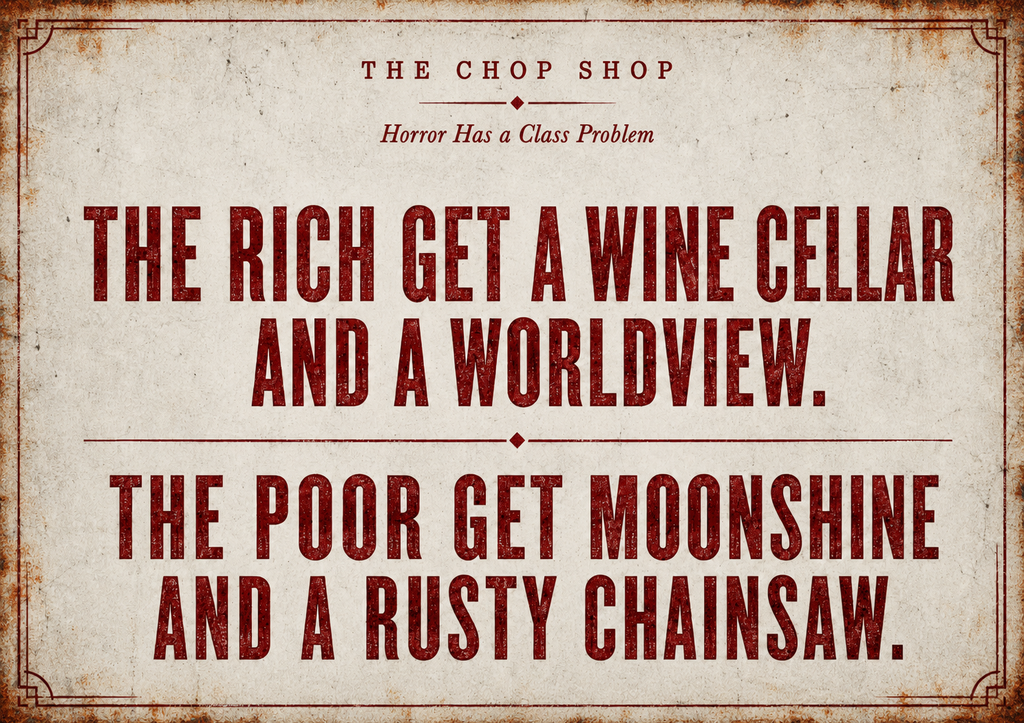
The rich get a wine cellar and a worldview.
The poor get moonshine and a rusty chainsaw.
That imbalance is deeply revealing. Even when horror despises the wealthy, it often still considers them worthy of an explanation. Their monstrosity has causes. Their behaviour can be examined, diagnosed and understood.
The dirt-poor monster is more likely to simply be.
There is no need to explain Three Finger’s rampage in Wrong Turn because the film assumes his body has already done the talking.
That does not automatically make every inarticulate villain classist, nor does giving a rich psychopath a monologue make a film secretly sympathetic to billionaires. But taken as a recurring pattern, it exposes something uncomfortable about whose inner lives horror considers worth exploring.
The wealthy may be decadent, corrupt and morally rotten, but they are still granted complexity. The impoverished are far more likely to be reduced to appetite, environment and bloodline.
Even when horror condemns the rich, it often grants them one privilege the poor are denied: the dignity of being understood.
Poverty Tourism, but With Machetes
Another factor worth considering when looking at how horror depicts poverty is where it chooses to put us as the audience. More often than not, we are standing beside the outsider.
In Candyman (1992), Helen Lyle enters Cabrini-Green as an academic who is investigating the urban legend of Candyman and collecting stories from people who live there. Their fears are fascinating when they are simply material for her research, something to catalogue, analyse, and eventually turn into professional credibility.
But then, those fears become real.
There is something uncomfortable about the journey because, at the start, Helen experiences Cabrini-Green almost as an anthropologist might approach an unfamiliar culture. She can enter, observe and, theoretically at least, leave again. The residents do not have that luxury.
The professional couple in Eden Lake occupy a similar position. Jenny and Steve arrive at the lake expecting access to a picturesque rural space, only to find that people already live around it and use it quite differently. What begins as an argument over noise, behaviour and territory escalates horrifically, but underneath it sits a quieter question: who has the right to be there?
The pattern is also in The Texas Chain Saw Massacre. Its young protagonists travel through a landscape whose economic decline barely registers to them. The slaughterhouse, abandoned jobs, and people left behind by industrial change are part of the scenery, until that scenery makes a spirited attempt to disembowel them.
That point of view matters.
Horror frequently places the audience beside respectable, comparatively comfortable outsiders as they enter poorer or marginalised communities. We encounter those places through their discomfort, confusion and fear. The strange house, the unfamiliar accent, the hostile pub or the run-down neighbourhood are presented first as warning signs.
The inhabitants cease to be merely people in their own right; they become part of the environment.
The impoverished community becomes somewhere the protagonist has wandered into and now needs to escape.
None of this means that an outsider protagonist automatically makes a film classist. Sometimes that perspective is precisely what the film is interrogating. Candyman, in particular, is acutely aware of Helen’s position and the gulf between studying deprivation and actually living within it. But it does raise an uncomfortable question about identification.
When horror invites us into a poor community, are we being asked to understand the people who live there? Or are we simply being shown somewhere frightening enough that we should be grateful we can leave?
Final Thoughts: The Monster Has a Postcode
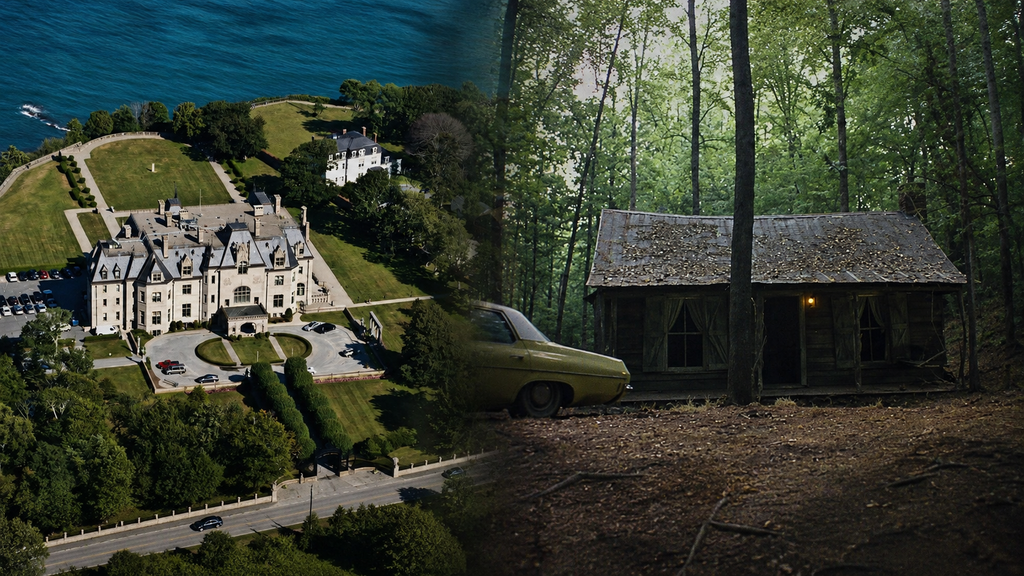
Right at the beginning of all this, we had two scenes in two homes.
One, a sprawling ancestral country mansion with beautiful parquet floors, portraits of great-grandparents, an extensive wine cellar and probably at least one room nobody is allowed to enter after sunset.
The other, a dilapidated, collapsing shack at the end of an unmarked dirt road, surrounded by rusting, decayed vehicles and populated by people whose dental history looks like it could be carbon-dated.
Horror knows exactly what both locations mean.
The mansion tells us that wealth conceals exploitation. Somewhere under all of that good breeding, expensive tailoring and tasteful decor, there is a deeply dark and repulsive secret, a blameless victim or a bargain written in blood that should never have been made.
The mansion on the hill and the crumbling shack at its foot may belong to the same economic landscape.
The shack tells us something else entirely. Poverty conceals primitive savagery. Isolation spells backwardness, deprivation means degeneration, and the people inside have spent years waiting for somebody to take a Wrong Turn.
Both depend on us recognising the code before anyone actually does anything monstrous.
This is where horror’s relationship with class becomes uncomfortable.
At its weakest and most obvious, the genre treats wealth and poverty as two unrelated forms of moral failure. The rich are corrupted because they possess too much. The poor, because they possess too little. One group has been softened by luxury, the other ravaged by deprivation, and apparently the only desirable financial position is somewhere in the middle, with a mortgage and a modest workplace pension.
The more interesting films understand that those different worlds are not sealed inside separate snow globes.
The mansion on the hill and the crumbling shack at its foot may belong to the same economic landscape.
The People Under the Stairs understands this explicitly. Parasite practically builds its entire architecture around it. The Texas Chain Saw Massacre, in its own filthy and considerably less polite fashion, shows us what can remain after an economy decides certain people are surplus to requirements.
That does not mean horror needs to stop giving us murderous aristocrats, hillbilly cannibals, feral teenagers or serial killers with better skincare routines than the rest of us could ever afford.
Hell no, we love that shit.
It simply means that horror becomes far more interesting when it asks why those monsters exist rather than assuming their net worth has already answered the question.
Because horror has always understood that money changes people.
Its class problem starts when it assumes that not having any does too.