
Horror Tropes Under the Knife
The Harbinger: The Lunatic Who Was Right
In Horror Tropes Under the Knife, we’ll be looking at the bones and sinews of popular horror tropes: where they came from, why they stuck around, and how they have evolved over time. Next on the slab is horror’s Cassandra: blessed with the ability to see what lies ahead, but cursed so that nobody will believe them.
You know the Harbinger, even if you don’t know their name.
He is standing beside the road in an ill-fitting, filthy coat, possibly sporting teeth that would make a Victorian dentist quietly close his bag and leave. He is probably carrying a small dead animal. He watches your car pass as though he has already seen the smoking, blood-slick wreckage it will become.
Perhaps he decides that the correct way to introduce himself is to grab your wrist and hiss, “The hills remember your mother’s name.”
Perhaps he is more direct and simply raves that nobody has ever returned alive from the old Crowley ranch.
Then again, the Harbinger might be a rugged survivalist who has spent years honing her body and mind into a weapon, single-mindedly preparing to rid the world of one very specific flavour of evil. Her family thinks she is paranoid. The police think she is dangerous. Her neighbours would very much like her to stop filling the garden with man-traps.
You ignore them.
After all, you have an awesome weekend of being young and conventionally attractive ahead of you at your cousin’s cabin in the woods, while this person is quite obviously mad as a box of particularly unstable frogs.
And they are mad.
They are also completely right.
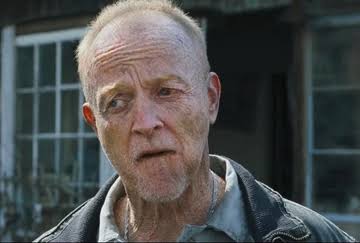
Who is the Harbinger?
The Harbinger is essentially horror’s warning klaxon. They are there before the hot young idiots wander, eyes wide open, into the nightmare, while there is still time to turn around and keep running until they hit Tijuana.
The Harbinger stands as a warning and a lighthouse of sorts, guiding the wise away from danger and bearing witness to the foolish. They know what waits, hungrily, in the woods, beneath the house, or at the end of the track that appears on no map.
Most importantly of all, they try to warn someone.
But nobody listens. They never do.
This is an essential part of the Harbinger ethos. If the warning came from a friendly, folksy, fat sheriff, an elderly professor who appears to share a wardrobe with Einstein, or a black-suited G-man, that might give the protagonists cause to pause, listen, and reconsider their plans.
The Harbinger lacks that kind of social authority. In fact, they normally lack matching shoes. They are too strange, too frightened, too poor, too stoned, too drunk, or simply too batshit insane to be taken seriously.
The protagonists think they have a weekend of consequence-free fun ahead.
The Harbinger knows they are entering the third sequel.
Before the Wild-Eyed Local
Before the dead rabbit held like a clutch bag, before loitering around petrol stations and warning attractive young idiots of their impending fate like it’s their job, the Harbinger could be found as far back as the fall of Troy. And I don’t mean the rich kid who gets cut into confetti in Act One.
In one common version of Greek mythology, Cassandra was given the power to see the future by Apollo in exchange for her affection. When she refused his advances, rather than rescinding the gift, he twisted it into a curse: although she would see the future, nobody would believe her prophecies.
Cassandra warned the Trojans that something wicked this way was coming, but of course they ignored her and wheeled the gigantic wooden horse, full of bloodthirsty Greek soldiers, left behind by their supposedly vanquished enemies into the middle of the city.
There are only a finite number of ways that will end.
None of them are good.
Cassandra is patient zero when it comes to this trope. She knows what lies ahead for the people actually doing things in the plot and tries to warn them that they are in danger. However, she is dismissed, not because she is wrong, but because nobody grants her the authority to be right.
A Harbinger’s curse is seldom a lack of knowledge.
It is a lack of credibility.
Iterations of this figure appear throughout religion, folklore and literature. Fools and idiots speak truths to power that more respectable people cannot. Prophets bring warnings their communities do not want to hear. Crones, hermits and wanderers possess knowledge forbidden to kings, priests and other rich men wearing ostentatious headgear.
As for the Harbinger’s patch, we turn to Gothic literature to find them a place to stand.
As the hot young idiots of the time approached the lonely castle, ruined abbey or ancestral estate, villagers warned them away. Coachmen refused to continue after dusk. Elderly women pressed holy objects into travellers’ hands and muttered strange warnings about what walked in the shadows beyond the mountain pass.
Of course, the sophisticated, cosmopolitan and educated outsider dismissed all this as ignorant superstition and continued towards high tea with the undead aristocrat waiting politely in the castle, with all the patience of the grave.
Later, as the trope evolved and absorbed elements from figures such as Coleridge’s Ancient Mariner, the survivor became someone compelled to tell others what they had witnessed. Many Harbingers appear mad because they have already seen the nightmare, face to something approximating a face, and lived.
The lunatic at the petrol station is not just a cinematic joke.
They are a rejected prophet, a Gothic villager and a traumatised survivor rolled into one battered, weather-beaten figure and deposited beside the highway.
He is Cassandra in a dirty trucker cap.
The Border Guard of the Nightmare
You will not find the Harbinger wandering, shell-shocked and bedraggled, into Act Two after the monster has already begun a radical human-viscera relocation scheme involving the protagonists. They appear earlier, at the exact moment when the ordinary world slips away and the nightmare begins.
They stand at the boundary, often at a crossroads.
It might be the edge of town, the last petrol station between civilisation and the wilderness, the rusted iron gates of an overgrown cemetery, or the entrance to the woods. They stand sentry beside the crumbling fence surrounding the abandoned house, or at the beginning of the road nobody uses anymore, despite it apparently being the only route recognised by the satnav.
The Harbinger guards the border of civilisation: streetlights, mobile-phone reception, emergency services, and people who will hear you scream and actually care when you do.
On the other side lies the plot.
Their position is not accidental. The Harbinger is stationed at the final checkpoint before the protagonists pass beyond the reach of ordinary help. They know what lurks in the no man’s land between the everyday world and the realm of nightmare. Unlike the protagonists, they understand that the landscape ahead follows different rules.
Those aren’t just woods.
That house isn’t actually empty.
The old road was not abandoned simply because the council ran out of tarmac.
Once the protagonists pass the Harbinger, a subtle change takes place. Until that moment, they were simply travelling towards a destination.
Now they have been warned.
Their journey has become a choice. They may not fully understand the choice they have made, or even realise that they have made one, but the story has issued its warning. According to the cruel internal logic of horror, they are now fair game.
That does not mean they deserve what happens next. Being young and stupid is not a capital crime. Besides, the warning is often vague, if not outright esoteric. It is badly delivered and comes from someone who apparently spent the morning locked in fierce debate with a tree stump.
A debate which he lost.
“Turn back” is clear, urgent and pressing.
“The moon hunts by the light of their eyes” leaves rather more room for interpretation.
Nevertheless, the warning establishes that a threshold exists.
The Harbinger cannot stop them from crossing it. All they can do is point towards the nameless dread ahead and announce, with varying degrees of clarity, that something out there is pissed, and it knows they are coming.
In that sense, the Harbinger is horror’s terms-and-conditions box.
Nobody reads them.
Everyone clicks Continue.
Why Nobody Listens
The Harbinger’s problem isn’t that no one can understand the warning.
Granted, “The Shadow Man drinks deeply when the red door opens!” is absolutely dripping with ambiguity, but the protagonists still dismiss it without so much as a follow-up question.
They do not judge the warning on its own merits.
They judge the person delivering it by their apparent lack of them.
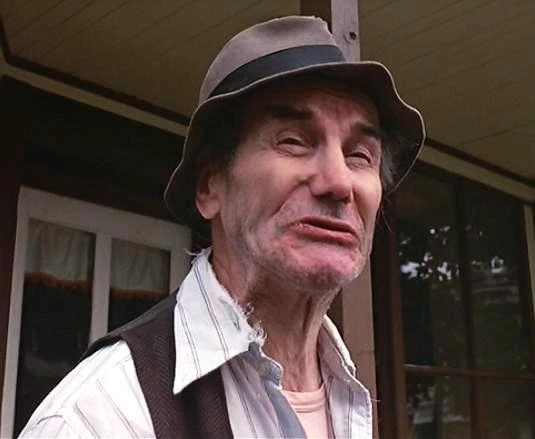
What the Harbinger lacks in respectability, they more than make up for with poverty, advanced age, trauma, addiction and mental health issues. They may also be unhoused, rural, socially awkward or marked in myriad other ways as someone whose testimony is not worth hearing.
They might wear cheap whisky and agricultural diesel as cologne, dress in clothes held together with string and prayer, or live in a caravan surrounded by newspaper clippings and jars of pickled things that should not be pickled.
The attractive young things look at them and automatically decide they already know how much their words are worth.
About as much as a fishnet condom.
This is where the trope reveals something quite ugly about how credibility works. People are not always believed because their evidence is strong. Often, they are believed because they look respectable while presenting it.
A clean uniform grants authority.
A white coat grants expertise.
A polished walnut desk, walls lined with framed certificates and a measured voice that never rises above mild concern can make complete and utter bollocks sound reassuringly competent and official.
The Harbinger doesn’t have any of that.
What they do have is a coat splattered with mud, panic in their bloodshot eyes and encyclopaedic knowledge of the thing beneath the lake.
Horror gleefully exposes the failure of respectable authority. The folksy sheriff assures everyone that the deaths were caused by an animal. The mayor refuses to shut the beach. The doctor diagnoses stress. The company man explains that there is absolutely no danger while discreetly investigating whether the monster can be patented.
Meanwhile, the person muttering beside the bins has conducted thirty years of pro bono field research and knows exactly what happens when the church bell rings thirteen times.
They are completely disregarded.
The protagonists choose comforting lies over uncomfortable truths because the lie comes from someone who would not look out of place sitting behind a desk.
The truth comes from someone who looks like they sleep beneath one.
There is a cocktail of class prejudice in that, often with a generous measure of ableism thrown in. Trauma makes the Harbinger frightened, obsessive and difficult to understand, and those symptoms are treated as proof that their story cannot be trusted rather than possible evidence that something terrible happened to them.
Their fear becomes the very reason nobody believes they have anything to fear.
That is the cruel engine at the heart of the trope.
The Harbinger is not ignored because they are wrong.
They are ignored because society has already decided what a reliable witness is supposed to look like, and it does not look like the person screaming the truth from the edge of the woods.
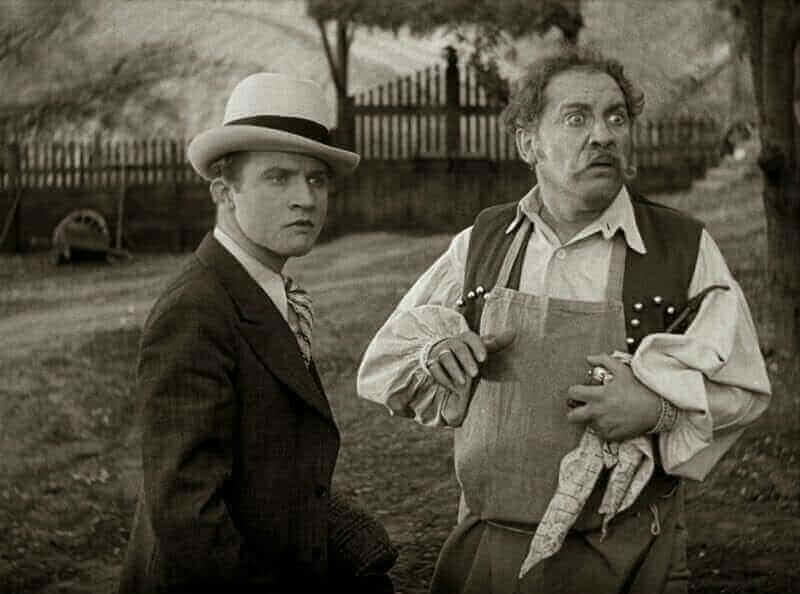
The Harbinger as Survivor
The reason the Harbinger knows what lies ahead for our young, disposable archetypes is often because they have already been there.
They have crossed the threshold of the house, wandered beyond the boundary of the woods, opened the box, read from the book that has no name, or gone for a dip in the lake despite the abundance of extremely fresh memorial flowers.
They have entered the nightmare.
More importantly, they have come back out again.
This makes the Harbinger a reflection of the protagonists’ potential future. They are what survival looks like without the warm, reassuring dawn, the approaching sirens or the swell of heroic music. There was no nice, neat fade to black when the proto-Harbinger escaped. No credits rolled. All that remained was to wake the next morning with the images of what they had witnessed tattooed on the inside of their eyes.
The monster may have sloped back into the woods, been “killed”, or sent screaming back to Hell, but the knowledge remained, no matter how many times the survivor tried to pickle their brain.
That knowledge keeps them isolated.
They cannot return to normality because they now know the truth: normality is only a gossamer-thin veil pulled over something hideous and hungry. They know the house may be abandoned but is far from empty. They know why nobody swims in the lake. They know that whatever was buried beneath the church was simply not buried deeply enough.
Everyone else can dismiss the noise outside the cabin as the wind.
The Harbinger does not have that luxury.
Survival has left them traumatised, obsessive and permanently on high alert. They cover walls with maps and newspaper clippings joined together by lines of red twine. They watch the tree line. They keep extremely potent weapons beneath the bed. They drive anyone who still speaks to them up the wall by endlessly returning to the same subject.
Not because they enjoy it.
Because they know the nightmare can return.
In another story, they might have been celebrated as the Final Survivor: caked in blood, physically and mentally exhausted, but alive as the sun rose behind them.
After several years have passed, however, survival tends to lose its heroic sheen.
The blood dries. It washes away.
The scars remain.
Friends stop returning calls. Concern becomes irritation, which eventually curdles into embarrassment.
Today’s triumphant survivor is tomorrow’s local loony.
The carefree young walking tropes see a stranger ranting about something in the woods.
We, the audience, may be looking at what happens when the Final Survivor is no longer believed.
That is possibly the saddest part of the Harbinger’s story. They may have escaped the monster, but they could not escape the narrative. It followed them home, hollowed out their old life and left them broken beside the road, desperately trying to stop someone else from making the same mistake.
They are not warning the protagonists because they are insane.
They are warning them because nobody warned them.

The Rules of the Warning
Just because they are the only person in the county who can tell you exactly what is going on with the chainsaw-wielding cannibal mutant witches in the Blood Forest, Harbingers are under no obligation to make their explanation clear, orderly or even remotely useful.
They will never say:
“There is an isolated family of cannibals who, for some godforsaken reason, cannot feel pain. They live on a dilapidated cattle ranch six miles east of here. Here is a map, the sheriff’s home and mobile numbers, and some spare shotgun shells. Aim for the head. Anything else will just piss them off. Good luck.”
Not when they can say:
“The painless wranglers hunger for flesh!”
Then refuse to elaborate.
There is a narrative reason for this. If the Harbinger delivered a sharp, coherent briefing, complete with high-definition photographs and maps showing clearly labelled escape routes, the protagonists would turn their minivan around, go home and spend the weekend getting stoned and eating pizza, with all their internal organs intact.
The narrative requires them to continue.
Therefore, the warning must be clear enough to make the protagonists uncomfortable, but vague enough to be completely disregarded. It should ping around their skulls without giving them enough useful information to prevent them from descending into the cellar armed with nothing more potent than a torch whose battery has the lifespan of a mayfly on crack.
The Harbinger’s knowledge often comes from one of three places: trauma, prophecy or folklore.
None of these comes with a handbook.
Trauma shatters memory. Folklore is communicated through symbols and scraps of dimly remembered stories. Prophecy, meanwhile, has been divinely forbidden from using plain English since the discovery of fire.
The Harbinger may speak in fragments because the truth itself has damaged their connection to ordinary language. They are left attempting to describe something impossible using whatever tattered scraps survived the encounter.
How can someone with a mind mangled by trauma, and without the specialised vocabulary that we enjoy from the safety of our sofas, explain that the woods awaken when watered with blood? That the house remembers every violent death committed inside it? That the thing at the bottom of the lake can smell sin?
“The moon has teeth” may genuinely be the clearest and most accurate sentence they can produce.
Still, there are limits.
If you know the old mine is inhabited by a flesh-eating demon that wakes whenever someone rings the church bell, shouting, “Teeth of iron sleep beneath the song!” is not a warning.
It is a cryptic crossword clue.
At a certain point, responsibility must be shared. Yes, the protagonists are arrogant, self-absorbed idiots who ignored the warning.
But if the Harbinger insists on communicating exclusively through dead rabbits, misquoted biblical passages and unsettling observations about the moon, some of the ensuing deaths are partly on them.
Famous Harbingers
There are many iterations of the Harbinger, but few embody the spirit of the trope quite as completely as Crazy Ralph from Friday the 13th (1980).
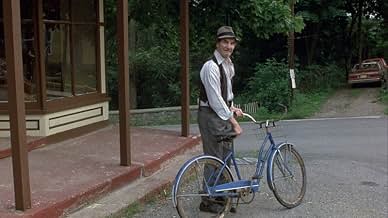
Ralph Neeley ambles into frame on his battered blue bicycle, a shabby brown hat perched on his head, announces that Camp Crystal Lake is under a death curse, gets dismissed as the local space cadet and is proved absolutely correct via the medium of a big pile of corpses.
Ralph is the trope in its most concentrated form: a bicycle, a hat, zero credibility and a piercing insight into the local mortality rate.
Sometimes, an entire community gathers together to issue the warning. The villagers in many versions of Dracula urge travellers to avoid the castle like a monkey with a chainsaw, while, closer to home, the patrons of the Slaughtered Lamb in An American Werewolf in London (1981) tell David and Jack to stay on the road and keep off the moors.
The locals know precisely what waits, hungrily, outside, but communicate this need-to-know information with all the clarity of a child explaining how the biscuit jar came to be broken.
Other Harbingers have a more complicated relationship with the monster.
In The Texas Chain Saw Massacre (1974), the proprietor of the petrol station warns the carefree teens away from the old Franklin homestead, despite later being revealed as part of the cannibalistic family himself. His warning appears sincere, but his motives are considerably less clear.
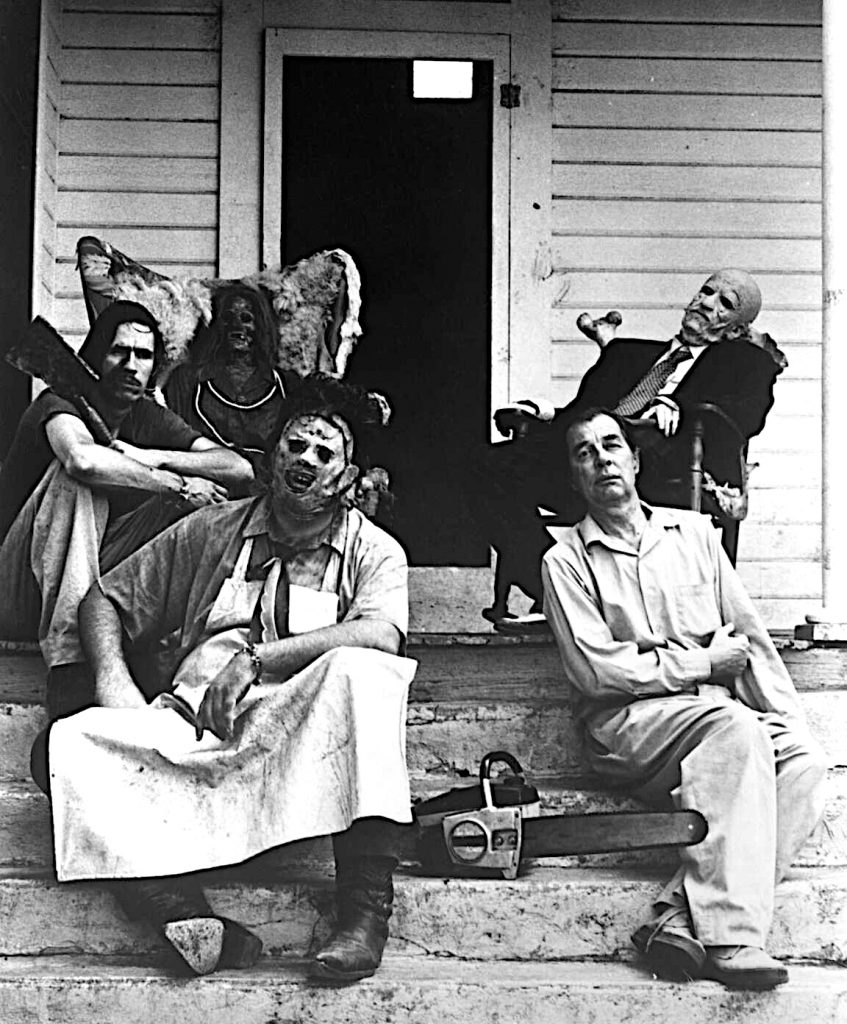
It seems even monsters give the main course one chance to leave.
Just one.
Jud Crandall in Pet Sematary (1989) has even more blood on his hands. Jud knows for a fact that the burial ground is dangerous. He warns Louis against using it, yet he is also the person who reveals its existence.
Jud is not merely the bouncer at the door of the nightmare. He unlocks it, explains what waits on the other side, gives a detailed account of how dangerous it is, and then acts shocked when Louis strolls straight through.
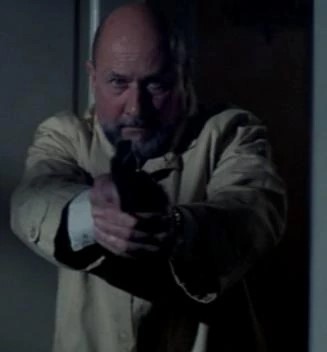
That brings us to Dr Loomis in Halloween (1978), and yet another iteration of the trope.
He begins the story as the ignored expert, warning everyone in sight that Michael Myers is something far worse than an escaped patient. Loomis, however, refuses to remain at the boundary, shaking his head like so many of his Harbinger brethren.
He follows the monster into the main body of the plot and, importantly, arms himself, becoming a cross between a prophet, a hunter and a full-time Michael Myersologist.
There are also times when the Harbinger does not need to be a person. A missing-person board, an abandoned campsite complete with half-eaten meals, a dire warning scratched into a creepy old book, or a bloodstained diary entry can all perform the same role.
Something, or someone, warns Team Pretty-but-Dumb that the nightmare is waiting just around the corner.
They turn the bend anyway.
The Problem with the Harbinger
The life of the Harbinger is seldom a happy one. Being proven right does not mean they are treated well.
They may eventually be vindicated through the time-honoured tradition of corpses with good hair and flawless dentistry piling up across various rural locations. Despite this, the story itself often conspires to present them as amusing, hideous or disposable.
Their warning matters.
Their humanity frequently does not.
That is the unpleasant contradiction at the heart of the trope.
Horror tells us that our lives may depend on listening to the madman, while simultaneously inviting us to point at him and laugh.
Mental illness is often used, somewhat lazily, as narrative shorthand for forbidden knowledge. Disordered speech becomes a proxy for prophecy. Paranoia means that someone has glimpsed something they should not have seen. Social isolation places its sufferer closer to the supernatural, while addiction implies that they witnessed something so awful that sobriety became an unsustainable lifestyle choice.
This is where trauma stops being an injury and becomes part of the costume.
The Harbinger twitches, mumbles, mutters, drinks like a man trying to drown something that can swim, and argues with people who are not there, or who died two or three movies ago. They dress exclusively in clothes apparently salvaged from several unrelated bomb sites and live surrounded by bad taxidermy, poor hygiene and newspaper clippings.
We, the audience, are encouraged to find them funny, frightening, disgusting and, quite often, downright sinister.
Then, a few scenes later, the faceless thing at the bottom of the lake starts eating people who matter to the plot, and we realise that every mad, incoherent word was true.
At first glance, this can even appear progressive. The so-called authorities are dead wrong, while the destitute, delirious and frequently drunk man living in a hut surrounded by man-traps knows the truth. Horror seems to be telling us that wisdom does not always arrive in a clean, pressed uniform carrying a laminated qualification.
However, the Harbinger is seldom allowed to be a marginalised person who simply knows something dangerous.
Their pain must make them mystical.
The local boozehound cannot merely be a man struggling with his personal demons. He must also possess an encyclopaedic knowledge of the breeding habits of the creature beneath the cemetery.
By the same rule, the traumatised woman cannot simply need help. She must have spent fifteen years tracking the Goat-Faced Man across three counties.
The unhoused stranger cannot merely be cold and hungry. They must be standing outside the abandoned hospital because they can hear the dead children singing from within.
The trope grants them knowledge.
Sadly, dignity is often sold separately.
To be fair, the Harbinger does not help matters by communicating exclusively through ominous non-sequiturs. “Don’t go into the woods. You will die,” is a useful, solid warning.
“The trees remember your mother’s ghost!” is not.
Despite the garbled message, poor communication is not evidence that someone has nothing worth saying.
Frequently, the Harbinger is killed almost as an aside, ignored, or simply forgotten by the narrative. The story uses their trauma to establish the danger, then leaves them in the dust while the attractive, respectable protagonists take centre stage.
Eventually, horror asks us to regret laughing at the Harbinger.
What it does not always ask is why we were encouraged to laugh in the first place.
How Modern Horror Changed the Harbinger
The Harbinger has not disappeared from modern horror.
They have simply acquired a laptop.
Today’s warning figure is less likely to be an aged lunatic crouched beside the road, clutching a dead rabbit like Linus with his security blanket. Instead, they might be a shell-shocked survivor, an obsessive researcher with glasses capable of starting a forest fire, a disgraced academic, or a true-crime podcaster who has spent fifteen years connecting deaths and disappearances nobody else believes are related.
They no longer need to lurk outside the abandoned house when they can upload a six-hour video essay titled:
THE GREY WOMAN OF BLACKWATER COUNTY: DEFINITIVE PROOF
It has ten views, five comments accusing the creator of being a psyop, and all the subtlety of an axe to the spine.
Nobody makes it to the evidence.
The internet should have made the Harbinger more influential. In theory, the protagonists can now research the murder house, isolated town or masked behemoth before even leaving their dorm room. They can find archived newspapers, missing-person reports, badly processed photographs and forum posts written by people who vanished shortly afterwards.
Instead, the sheer volume of information has created a different problem.
For every genuine warning, there are fifty videos made by some TikTok yahoo claiming that the monster was a weather balloon, an animal attack, or a perfectly ordinary person driven mad by whichever vaccine is on their hit list that week.
The truth is still out there.
It has simply been buried beneath advertisements, misinformation and a man named FlagFist1776 shouting slurs into a webcam.
Another mutation is that modern horror increasingly allows the Harbinger to step into the protagonist’s shoes. Rather than stumbling blindly into the nightmare, they begin the story already knowing something is wrong. Their problem is not discovering the monster, but persuading their peers that the danger exists before the body count begins to warm up.
Others become false Harbingers: their paranoia is misplaced, their evidence misunderstood and their elaborate theory completely wrong.
All the while, they have been watching the cellar door.
Something entirely different has climbed through the window.
The latter-day Harbinger may no longer wear a dirty trucker cap.
They are still Cassandra.
Now they have a podcast nobody listens to.