
There and Back Again, (But with Consequences)
By
Robin B. Devlin
Some GMs move heaven and earth to craft intricate towns, utterly bursting with interesting NPCs and factions vying for power. They design dungeons with layouts that make sense, monsters who have a reason to be there, and rooms that do not appear to have been assembled by a drunken architect with a grudge against doors.
The problem arises when they try to get the party from one of these locations to another.
The GM looks at the map and realises they have about a week of dead space to fill.
In most fantasy TTRPGs, and in D&D in particular, badly handled travel tends to fall into one of two camps. On the one hand, you get GMs who basically teleport the party from A to B, hand-waving it away with some vagueness about travelling for five days and marking off a commensurate number of rations. Serviceable, simple, and dry as dust.
Maybe you or your GM are part of the avant-garde movement, though, and include what I like to call the “wolf tax,” which is to say that for every mile travelled, a certain number of wolves must be fought.
Both of these are pretty naff ways to deal with travel. They are not inherently wrong, but they do lack imagination. They take what should be an organic part of the adventure-roads where people vanish, kingdoms fray at the edges, rumours travel faster than armies can march, and gods wear the clothes of beggars-and turn it into a commute.
Without buskers or Starbucks to break it up.
At its best, travel can add roleplay opportunities, allow for diegetic world-building, foreshadow danger, and make the world feel lived-in. It can make the destination feel earned rather than merely selected from a menu.
And sometimes, there will be a weird old man selling cursed turnips by the roadside.
The Road Has to Do Work

There is an old Tolkien line about roads being dangerous things, because once you step onto one, there is no knowing where you might be swept off to.
That, right there, is the point.
Boring travel is not an issue with travel itself. The problem is that the road isn’t doing anything. And I don’t mean planting a few well-chosen earth and rock elementals.
If Tolkien had just waved his hand and skipped the travel, then The Lord of the Rings would have been a pamphlet.
A journey isn’t just a dotted line between the town and the adventure site. Done well, it reveals the world, sets the mood, tests the party in all kinds of ways, creates choices, and, most of all, makes the destination feel earned. Done well, it will do all of this while wearing a weather-beaten cloak and looking slightly dodgy at a fork in the road.
Good travel does not mean you roleplay every blister, every bowl of mystery meat stew, or every time someone forgets to pack the rope. That way lies madness. If we micromanage every footstep, your fun game about furnished caves and reptilian arsonists soon devolves into inventory and stock management.
What it does mean is treating travel as an integral part of the adventure.
The road should be a place where the party meets refugees on the run from whatever the heroes are blithely walking towards. Forgotten shrines and abandoned watchtowers should dot the path. Mysterious broken markers should stand in silent testament to untold pieces of the world. Old borders, roadside inns, toll gates, warning signs, half-buried battlefields, and songs overheard by the fire should all tell the players what kind of world they are moving through.
A well-planned, well-executed journey should ask, then answer, at least one question:
- What does this road reveal about the world or the party?
- What does it cost them to traverse it?
- What choice does this road offer?
- What changes before they reach the other end?
If your answer to all four questions is “nothing,” then the issue isn’t that travel is dull.
The issue is that you are making it dull.
The Three Questions of Good Travel
As a GM, when you plan a journey for your next TTRPG session and want to prevent it from becoming a corridor with a better view, give some thought to three questions.
- What does the road reveal?
- What does the road cost?
- What choice does the road create?
That is the little travel triangle. The holy trinity of getting from A to B without accidentally inventing fantasy commuting.
What Does the Road Reveal?
A good journey should show something new about the region the players are travelling through, or the world at large.
Is there a border dispute between rival nations? Then the players might encounter a roadside inn sitting right on the disputed line, with soldiers from both sides keeping one hand on their swords as they sup their ale.
Are they travelling to confront a local warlord? Then maybe the warlord’s mercenary patrols become more frequent as they draw closer to the abandoned mine where he runs his criminal empire.
Are they hunting a vicious beast that has been attacking a village? Then as they draw closer to its lair, there should be less and less wildlife. No birdsong. No rabbit tracks. No foxes screaming in the night. Just silence, and the sense that everything sensible has already left.
The road is also where climate and geography get to matter. Are the characters trudging through hip-deep snow? Because I am fairly sure the halfling will have something to say about that. Are they baking in the summer sun, sweating inside their armour, discovering that plate mail is essentially a portable oven with straps?
Then there are the people.
What sort of lives do they pass on the road? Merchants selling strange and exotic goods. Friendly farmers offering shelter in their barns. Pilgrims with blistered feet. Refugees with frightened eyes. Soldiers who do not know whether they are guarding the road or occupying it.
Cities show what a kingdom says about itself. Roads show what it is actually like.
Travel is a brilliant opportunity to show off your world and its people without stopping the adventure to read from the Big Book of Lore while your players quietly fossilise at the table.
And sometimes the ghosts of quests past come back to haunt them. Perhaps the pet of the mad warlock they defeated a few weeks ago has been tracking them across three counties and chooses exactly the wrong moment, or the right one, to strike.
What Does the Road Cost?
Travel should cost something.
Not always hit points. Not always rations. Not always another bloody wolf encounter. But something.
Time. Safety. Comfort. Secrecy. Spell slots. Ammunition. Sleep. Trust. Coin. Patience. The horses’ willingness to keep participating in these shenanigans.
In a world where a massive fire-breathing, winged, kleptomaniac, lizard chrysophilist could decide to make a snack of your armoured arse, travel should feel at least a little dangerous. That is an extreme example, granted, but between troll toll bridges, mercenaries, enemy agents, ancient cults doing ancient culty stuff, and gods disguised as little old ladies selling apples at the roadside, the journey should not feel like a pleasant ramble with sword belts.
I once ran a game where, due to random encounters, bad decision-making, and sheer dumb bad luck, the party didn’t get a decent uninterrupted long rest for the entire journey. By the time they reached the dungeon, they had to approach it without all their best abilities fully restored.
That changed the dungeon.
They could not just kick the door in and spend resources like drunken nobles at a pie auction. They had to think. They had to ration their strength. They had to decide whether pressing on was brave, stupid, or that special adventurer mixture of both.
That said, cost should not only mean punishment. The road can take from the party, but it can also give.
Maybe they gather valuable information about the mission’s villain. Maybe the elven archer finds the right wood for new arrows. Maybe the party hunts enough food to make the most dedicated prepper nod in solemn approval. Maybe the angry owlbear encounter gives them just enough experience to level up before the real trouble starts.
A journey should change the party’s position. It should leave them better prepared in some ways, worse off in others, and slightly more suspicious of roadside fruit.
What Choice Does the Road Create?
One of the best things about roleplaying games is that there are almost infinite ways to handle a situation.
A tribe of goblins worshipping a strange little bog god by sacrificing stolen livestock? The cleric might try to convert them. A necromancer breaks into the graveyard and starts assembling a Temu army of the dead? Time for a wizard duel. A gang of trolls are running a “protection” scheme on a local village? Send the bard in to seduce the leader. Sure, they will probably get squashed, but it will make for a memorable encounter at the table.
The point is that the road should not just present obstacles. It should present decisions.
Do the characters take the quick but dangerous route through the Forest of Uncertain Death, or the long way along the well-patrolled Road of Probably Fine?
If they encounter strangers who need help, do they stop and do the heroic thing, or do they stay on mission because the ritual begins at midnight and evil is notoriously poor at rescheduling?
Do they push on past exhaustion to reach somewhere safe, or do they camp in the glade of whispering stones and risk the nightmares, visions, and suspiciously specific prophecies?
Either option should have consequences. Not always catastrophic ones. Not always obvious ones. But the world should tilt, even slightly, because of what they chose.
Maybe the strangers they helped become allies later. Maybe the delay costs them. Maybe the safe road lets the villain prepare. Maybe the dangerous shortcut earns them a warning from someone who survived it once and has never quite stopped shaking.
Whatever they encounter on the road, and however they handle it, there should be ripples.
For example, let’s say a group of heroes defeats a band of trolls but does not know how to stop them regenerating. So, they chop the trolls into little bits and leave the mess behind.
Congratulations. The next poor souls using that road now have to deal with a lot more trolls.
If your travel has no stakes, no choices, and no revelations, then it is only part of the game in the same way a loading screen is part of a video game.
Technically present.
Spiritually furniture.
Travel is not (just) Random Encounters
Random encounters are not, overall, bad.
I once had an entire serial-killer subplot unfold because the dice told me the party would encounter a vendor selling “suspicious” leather goods. With a bit of thought behind them, random encounters are a genuinely useful resource, and they have been with the game longer than most of the character classes.
Bad random encounters are something else entirely.
Bad random encounters are when 2d4 wolves jump out of the bushes and attack your party, which includes both a druid and a ranger, just because the dice coughed and pointed at the wolf column.
If it is important enough to mention, then it should be doing a job. If it is doing a job, you want to make sure it is doing that job well.
So let’s take our impromptu wolf pack encounter. Rather than throwing them at your party like a furry sucker punch with teeth, consider what those wolves could actually be doing.
Foreshadowing
As the party draws closer to the site of the main adventure, they might begin to notice dead or absent wildlife. They might find abandoned farmhouses, perhaps now being used by bandits as an impromptu base.
In our case, maybe the wolves in question have been used by the dungeon boss as guard dogs. They could even be branded with his mark. Or maybe they escaped his cruelty and are half-mad with hunger.
When you consider a random encounter, think about how it fits into the story of your adventure, or even better, the story of the next one, if you are a planner. If yours is a more chaotic path, you could always have it foreshadow something you are not quite sure of yet. Just make sure to circle back and close the loop.
Worldbuilding
Worldbuilding thrives on the road. You can populate it with shrines to gods, both popular, rare, and maybe even unheard of. There is nothing quite like a player rolling a 27 and still not having a clue which god is being honoured because they are not from the local pantheon.
You might include a toll road of questionable legitimacy. Are there refugees fleeing whatever the players are charging towards? Maybe a travelling judge or inquisition? After all, no one expects…
In our case, maybe the wolves are revered by a local druid cult. Or maybe there is a hidden town nearby that has an understanding of sorts with them: the townsfolk leave out food, and the wolves keep hostile forces out.
I’m a big fan of diegetic worldbuilding. By that, I mean taking small background details and letting them tell a story. Consider putting up wanted posters for the party’s quarry, or even for the party itself, depending on what is appropriate for the situation.
Pressure
The road is a hard place, as well as an exciting and interesting one, so it is always a good idea to apply gentle pressure to the players.
Resources like rations and ammunition could be running low. Maybe the road is safe and popular, so it is well patrolled, but the party are running low on coin. Maybe the weather is turning against them. If they are going north, perhaps it gets colder and colder the further they travel. In warmer climates, they might be dealing with awful rainstorms, swollen rivers, and roads that have turned into mud soup.
With our wolves, we could make them dire wolves. Or, if your party is getting cocky, beefy, or cocky-beefy, have them led by a werewolf.
A deft touch is best here, as you want the pressure to build in proportion to the difficulty of the dungeon you have planned. There is no logic in having the party wade through trolls, die-hard dragonborn cultists, and, yes, rabid wolves, only to have the dungeon itself populated by a handful of kobolds and one suspiciously nervous rat.
Choice
Roleplaying is all about choices. Just as the party chose to trek a week across rough terrain to delve into a dungeon populated by half the hostile creatures in the realm, they should also have choices when it comes to obstacles and diversions along the road.
For any given encounter, the party should have options beyond simply twatting whatever the table presents until it falls over.
Do they have to intervene when they see the inquisition harassing a family of fleeing refugees? Can they ignore the potential threat and live-and-let-live with the ogre on its way to settle a score with the mayor of the town they have just left? Do they take a detour around the river with the washed-out bridge, wade through it, or use spells and abilities to get across? Do they make a bargain with the brigands who waylay them, or investigate further to see if they are linked to the warlord they are travelling to confront?
In the case of our wolves, the party could try to scare them off, throw drugged meat at them, calm them, follow them, or simply bust out the weapons and earn 50 XP apiece.
Character
Just letting your players roleplay their parts is one of the best things about being a GM.
Once, during a session where we were traversing the Strom Horn Mountains, a party I was in chatted in character for the best part of the session about a whole bunch of stuff. The DM literally stood agog, then eventually started making notes. I seem to remember the subject turned to what scared us the most. For my rogue, it was “spiders… werewolves… shudder spider-werewolves.” The party laughed, but within a month we were up to our eyes in the tomb of a drow sorcerer, surrounded by Lolth cultists with werewolves on chains.
You can get decks of cards designed specifically to spark conversations around the campfire. I find that a deft touch works best with them. Hand out one per journey, for example. I don’t expect you to roleplay every single second of the journey in real time, but slowing down every now and then can work wonders.
Let the party discover that the beloved monk NPC has a weakness for marshmallows and liquorice root. Show that whenever the paladin’s hands are idle, they polish their armour. Maybe the wizard is teaching the barbarian a different language. There are a million and one small moments that can show character and aid roleplay.
Consequences
As I mentioned before, sometimes the chickens the players let out of the henhouse a couple of sessions ago come back to roost.
The bandits they defeated on the old road could now be undead thralls of the necromancer they are travelling to confront. Or, if the players spared them, those same bandits might remember their mercy and offer them food, shelter, and information when they need it most.
Maybe the bridge is guarded because the party failed to stop the war from spreading. Maybe the village is thriving because they cleared the old mill months ago. Maybe the innkeeper gives them a free room because stories of their heroics reached the road before they did. Maybe the guards close the gates when they see them coming, because stories of their heroics reached the road before they did.
Consequences do not always have to be punishment. Sometimes they are gratitude. Sometimes they are fear. Sometimes they are a song, a wanted poster, a toll, a locked door, or a child pointing at the party and whispering their names.
The road is where the world remembers.
That is what makes travel feel alive. Not because every mile has a monster hiding behind a hedge, but because the party can feel the world changing around them as they move through it.
The Five Types of Interesting Travel Encounter
There are five broad types of travel encounter that can make a journey feel like part of the adventure, rather than simply “the dice say you have to fight some hobgoblins now, so have at it.”
The Obstacle
This is something physical that blocks progress. Something that no amount of talking, bribery, or seduction rolls from your party’s bard is likely to solve on its own.
For example, the party might reach the banks of a mighty river and find that the bridge has been washed out, probably by the awful storms they rode through yesterday. The ferry they were due to catch might be missing from the dock, leaving behind nothing but a very uncomfortable-looking ferryman and a lot of very cross customers waiting to cross. Or the party could encounter a landslide or avalanche on their mountain path, which may or may not be related to an earth elemental currently having a very bad day.
The road could be under military quarantine or blockade, forcing the party to argue with a bored and impatient guard, find a way around, wait it out, or resort to “special” measures.
Of course, if they are camped in a forest, there could always be some fey nonsense waiting for them. They break camp, gather their gear, turn back toward the path, and find that it has mysteriously disappeared.
After all, if you are going to have a fantasy setting, what are the fey for if not messing with the players? It is practically in the Terms & Conditions of being a GM.
The fun of an obstacle is not that it stops the party. The fun is watching them decide how much they are willing to spend, risk, reveal, or break to keep moving.
The Temptation
Players are basically heavily armed kleptomaniac magpies with the attention span of an overcaffeinated squirrel. If you put something interesting, shiny, or valuable just out of their field of view, I am willing to bet my favourite dice set that they will make a beeline straight for it.
They could see smoke rising from a watchtower that will take them a few hours off course. This might be perfectly innocent: a lightning strike, a guard nodding off, an ember from the fire catching the rug. Or it could be something more sinister. Maybe the local monsters have consolidated their forces and are now practising precision strikes to test the weaknesses in human defences, neatly foreshadowing the next adventure. Or maybe the campaign villain is getting closer.
The party could encounter an extremely rare, badly wounded creature, like a griffon. This one is interesting because it immediately asks what sort of people the characters are. Will they heal it? Slay it? Harvest it for parts? Walk on because the ritual begins at midnight and heroism has scheduling conflicts?
Our old friend consequences comes back into play here. Each of those choices should have ripple effects that alter the region in small but meaningful ways.
Perhaps they come across a freshly slain body on the road, wearing foreign clothes and carrying unfamiliar coins. It is obvious the body has already been searched before the party arrived, but when they look more closely, they find a treasure map tucked into one boot.
Maybe they ride past a shrine, standing openly beside the road, dedicated to a “dark” god, or at least one with markings and heraldry suspicious enough to make the party paladin’s thumbs prickle. Or perhaps they meet a merchant who just happens to be selling exactly what the players need: silvered ammunition, rare herbs, gopher-wood stakes, bottled sunlight, whatever fits your flavour of nonsense.
Only the cost is not coin.
The potential to derail your own game is immense. Put something slightly mysterious just off the road and your players will do the rest. Your job is not to stop them from taking the bait, but to make the bait worth taking.
The question behind every temptation is simple:
How much delay is worth it?
The Warning
Now, I’m not talking here about a corpse in a gibbet, although I’m not automatically against them. They are just a little… obvious.
What the warning encounter should do is give the players a flavour of what is coming and ask them one important question:
Do you change your plan?
Maybe the party runs into a group of refugees displaced by the villain du jour. More often than not, these survivors will have half a story, with fear, hunger, and fatigue filling in the details.
Now, I’m not saying you should paint Redchár the Undying as an eight-foot-tall necromantic powerhouse with literal clouds of evil billowing off him like black, oily smoke, then later reveal him as a skinny level 3 warlock with bad posture and halitosis that could cut through a bank vault. But remember, the poor sods on the run are probably level zero peasants. Their frame of reference will not be as wide as that of a seasoned adventurer.
In a similar vein, you could have a small stampede of animals heading away from the place the players are inexorably charging towards. You could even have owlbears, or more powerful creatures that do not normally run from much of anything, joining the stream of critters fleeing the scene. Then, as the players look around for clues, they notice Redchár the Undying’s glyph carved into the road markers.
Maybe they come across a hamlet so small and insignificant it is not on the map, but it has an inn, and nobody there speaks after sundown. Somehow, if the party says a certain name, the companionable silence in the taproom becomes a much more frigid and hostile hush.
There could be farms and crofts ravaged, picked clean, and burnt out by the warlord they are on their way to confront. Maybe the roadside is littered with the walking wounded from his attacks.
However you foreshadow the upcoming dungeon, you really do need to follow through on what you have promised your players.
Let’s say they have noticed a real dearth of rats as they travel. Then, one night during camp, a whole stream of them comes pouring from the direction of the dungeon they are about to enter. If your players are anything like mine, they will want to know more, so they might use magical means to talk to one of the furry little cowards.
From the conversation with the terrified rat, they learn that the rats are running from “the big ones.”
Now, if you forget to put some R.O.U.S.s in the dungeon, one of your players will remember.
Trust me.
They will.
The Mirror
Sometimes, as a GM, if you want to show your players their worst flaws, hidden fears, or uncomfortable truths, all you have to do is set up a mirror and invite them to gaze into it.
Then ask:
What sort of heroes do you want to be?
Maybe the party passes through a village that has been badly affected by their earlier actions. Perhaps they botched a goblin cave mission, some survivors got away, and now the gobbos are back looking for revenge. Or maybe the wyvern they slew a while back was only the hatchling, and now Mama Wyvern is holding the village personally responsible.
All you have to do is look back over your notes from the last three or four adventures. You don’t really want to go much further back than that unless you enjoy archaeological bookkeeping. Then ask yourself: what if something they did had a butterfly effect?
Of course, maybe the party are not the ones who screwed up.
There could be another adventuring party who, completely coincidentally, act as mirrors of the party themselves. Their abilities, personalities, and methods might be a warped reflection of the heroes. This B-team could have made an utter pig’s ear of the owlbear job, completely botched the mission, or even need rescuing themselves, leaving the players to pick up the pieces.
It doesn’t always have to relate directly to the current mission, lest your players start to feel like the centre of the universe. If, in your campaign lore, there is a war in the north, as there so often is, perhaps they encounter a deserter. One who is open and honest about his cowardice, now on the run, and willing to throw himself on the mercy of the party.
The dice could have coughed up a bugbear encounter, or whatever your particular band of wandering armed nomads’ favourite target happens to be. Only this time, it is a family of them, and rather than attack, the mother protectively pulls her young close.
Or maybe the party meets a merchant caravan heading in the opposite direction, and one of the children or vendors idolises them.
For all the wrong reasons.
There are plenty of ways to hold a mirror up to your players. Done well, it sparks roleplay, complicates easy assumptions, and often leads to future adventure hooks without you having to force anything.
The road does not just show the party where they are going.
Sometimes it shows them who they are becoming.
The Campfire
Sometimes encounters, good encounters, aren’t random at all. In fact, they happen every night when the light gets too bad to travel by.
Every night, your party makes camp. They share a meal, maybe play cards, fix their kit, tend their wounds, stare moodily into the fire, and, presumably, talk.
As well as using something like a campfire conversation card set, you could have something non-threatening but unusual happen overnight. A favourite of mine is to have a fellow traveller see their fire and approach, offering some rations in exchange for a shared meal and the warmth of the flames.
On one particular watch, I once had an Oathbreaker Paladin offer to stand guard all night. All he wanted was a hot meal. Naturally, the party’s own dwarven paladin had one hand on his big hammer of doom, but once the Oathbreaker told his story, the scene became something far more interesting than a fight.
The campfire is the perfect place to ask about the scar the warlock tries so hard to hide, the sealed letter the paladin keeps in his breastplate next to his heart, the monk’s odd oath, or the barbarian’s dead brother.
The big question this encounter answers is simple:
Who are these people when no one is trying to turn them into novelty pincushions?
This is the hidden gold of your random encounter toolkit, because a lot of GMs forget that the campfire is one of the few quiet spaces where the players can unbuckle their armour straps and let their guard down.
Not every travel encounter needs to block the road, bare its teeth, or scream prophecy into the rain.
Sometimes it just needs to give the characters room to breathe.
Make the Destination Feel Earned
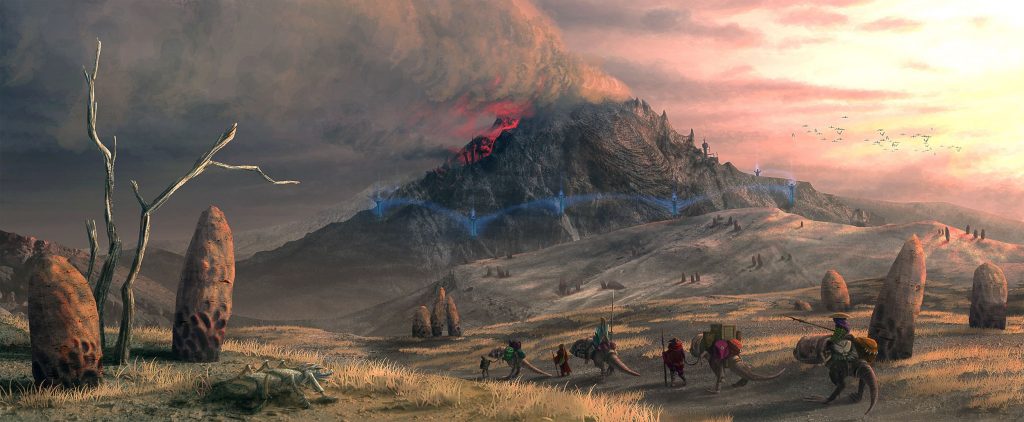
Once the party has trekked across a cursed marsh, lost a mount, bargained with a ferryman who might be dead, sheltered in a temple to a forgotten god, dodged enemy patrols, and rescued an owlbear cub from a pack of Hook Horrors, the destination starts to feel bigger.
By the time they see the black tower on the horizon, it is no longer just “the next location.” It has weight. It has shadow. It has been looming over the journey before the party ever reached its gates.
Done well, the road creates anticipation.
Compare:
“You travel for a week and arrive at the village nearest the vampire’s castle.”
With:
“By the third night, you can see it on the ridge. No matter which way the road turns, the castle remains ahead of you. The locals stop speaking its name after sunset. On the final morning, every horse refuses to continue.”
That is travel doing work.
The destination feels earned because the party has had time to dread it, approach it, hear rumours of it, see its effects on the land around it, and slowly realise that every mile has been pulling them deeper into its shadow.
Use Travel to Show Consequences
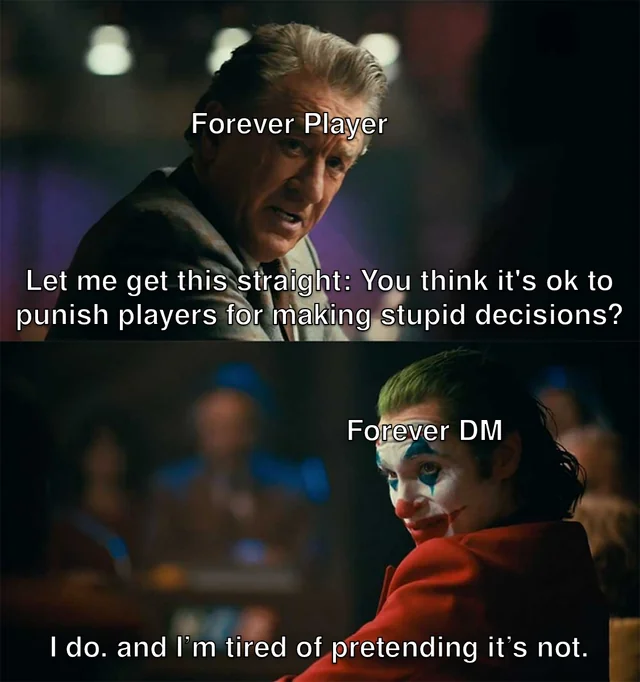
As every GM knows, the biggest problem for players isn’t their foes. It’s themselves, their decisions, and the consequences thereof.
It doesn’t matter if your party are a pack of murder hobos or a veritable jamboree of heavily armed Boy Scouts. Either way, the world should react to them. The trick is showing that reaction without making them feel like they are the literal centre of the universe, which I appreciate is a balancing act roughly akin to juggling feral cats during a thunderstorm.
Travel is one of the best places to do this.
If they saved a town from bandit raids, have them meet travellers and merchants from that town, people who recognise them, thank them, and maybe offer them a discount, a hot meal, or a warning about the road ahead.
If they botched or ignored a mission to stop a plague, there may be roadside graves, funeral pyres, shuttered farmhouses, or travellers who cover their faces when they hear where the party has come from.
If war is coming, they will find soldiers on the bridges, scouts in the woods, tolls doubled, and abandoned watchtowers dragged back into service.
If magic is failing, the old waystones might be cracked and cold. If the villain is winning, refugees will be walking in the opposite direction. If the party has become famous, infamous, or merely very loud in public, then rumours of their actions should reach places before they do.
The road is where campaign consequences pull on boots and start walking toward the players.
Keep It Moving

Having said all that, you don’t want to bore your players or turn the game into a cross between doing your tax return on horseback and sitting through a cartography lesson.
Here are some fast and loose rules that I find help when planning any journey in D&D.
- Don’t play every day of travel unless each day matters, or is interesting.
- Use one strong encounter rather than five limp ones.
- Give players meaningful choices.
- Summarise the dull bits with confidence. A few words about the day, the weather, and the terrain will do when nothing of consequence happens.
- Zoom in when something changes.
- Zoom out when nothing does.
Good travel is not about accounting for every blister, ration, loose horseshoe, and ominous cloud.
It is about knowing when to tighten the camera, tighten the sword belt, and when to let the road roll by while the party trundles onward, boots muddy, cloaks damp, and trouble waiting somewhere over the next hill.
d100 Travel Encounters That Aren’t Just Wolves
Roll 1d100, pick one that fits, or steal shamelessly and pretend you planned it all along.
- A bridge, ferry, tunnel, pass, or causeway is blocked by people who claim they have authority here. Their paperwork may even be real.
- A roadside shrine is covered in fresh offerings, but every holy symbol has been scratched smooth.
- A merchant caravan is stopped ahead, its guards arguing over whether the road is cursed or simply badly maintained.
- A lone traveller walks in the opposite direction, soaked in blood that is not their own, refusing to explain until they have water.
- The party finds a campsite still warm, with food half-cooked and bedrolls abandoned in a hurry.
- A messenger’s horse gallops past riderless, still carrying a sealed satchel.
- A milestone has been turned around so every direction points toward the same place.
- A group of refugees ask whether the party has seen soldiers, raiders, monsters, or anyone else with sharp objects and poor manners.
- The road ahead is blocked by a fallen tree, collapsed wagon, dead beast, or carefully staged inconvenience.
- A travelling peddler offers exactly what the party needs, but will not accept coin as payment.
- A flock, herd, or swarm of animals moves across the road in total silence.
- A local farmer insists the party must not travel after sundown, but refuses to say why while the sun is still up.
- A small child appears by the roadside and asks the party to help find their family. Their footprints begin several feet away from where they are standing.
- A band of armed locals are searching every wagon, cart, and traveller for a fugitive they describe very badly.
- A shrine bell rings in the distance, though there is no visible village, temple, or tower nearby.
- A wounded creature lies beside the road. It is rare, valuable, dangerous, frightened, and still breathing.
- A travelling judge, priest, tax collector, or official demands witnesses for a matter of local justice.
- A group of pilgrims are carrying a relic that everyone on the road seems nervous to pass.
- The party finds fresh wanted posters bearing either their quarry’s face, their own faces, or somebody who looks inconveniently similar.
- The path forks where the map says it should not. Both routes show signs of recent use.
- A patrol warns the party that the road ahead is closed, then quietly asks if they are willing to go through anyway.
- A roadside inn is full, but nobody is eating, drinking, singing, or speaking above a whisper.
- A broken cart blocks the way, and its owner offers a reward for help that feels far too generous.
- A flock of crows, ravens, gulls, or other scavengers follows the party for several miles without landing.
- The party passes a burial mound, cairn, battlefield marker, or roadside grave that has been recently disturbed from the inside.
- A travelling bard offers to sing the party’s deeds, but somehow already knows one of their secrets.
- A group of merchants are travelling without guards because, they insist, “nothing attacks this road anymore.”
- A stranger asks to share the party’s fire for the night and offers a story in exchange for supper.
- A river crossing, mountain path, gate, or trail has been washed out, sealed, frozen, flooded, buried, or otherwise rendered smugly unusable.
- The party finds a dead courier carrying three letters: one sealed, one opened, and one addressed to a party member.
- An abandoned watchtower, barn, cottage, tollhouse, or ruin shows signs of recent occupation.
- The local wildlife is absent, agitated, migrating, sick, unnaturally bold, or watching the party with unsettling focus.
- A noble’s hunting party has lost something important and is blaming everyone in sight.
- A group of labourers are repairing the road and claim the party must pay to pass, despite the work looking suspiciously theatrical.
- A shrine, statue, or standing stone bears fresh blood, fresh flowers, and one object that clearly does not belong.
- A stranger on the road recognises one party member by name, title, reputation, family resemblance, or prophecy.
- The party finds a trail of dropped coins, buttons, bones, feathers, teeth, or petals leading away from the main path.
- A travelling healer offers aid, but seems more interested in studying the party than helping them.
- A group of soldiers, guards, or mercenaries are escorting a prisoner who insists they are innocent and recognises the party’s destination.
- A toll is demanded by someone who may be an official, a bandit, a very committed actor, or all three.
- A storm forces the party to seek shelter in a ruin, cave, barn, shrine, or abandoned waystation already occupied by someone else.
- The party finds a map nailed to a tree, signpost, corpse, or door. It shows their route, but with one extra place marked.
- A travelling cook, brewer, or baker invites the party to share a meal, then asks increasingly specific questions about where they are going.
- A pack animal refuses to move forward, no matter how it is coaxed, threatened, bribed, or insulted.
- An old battlefield lies across the route. The weapons are rusted, but the footprints are fresh.
- A group of children are playing at being adventurers, and one of them is pretending to be a party member for all the wrong reasons.
- The party hears singing ahead, but the song changes whenever they try to listen closely.
- A merchant’s wagon contains legal goods, illegal goods, and one crate the merchant swears does not belong to them.
- The party discovers that someone has been camping in the same places they have, one night ahead or one night behind.
- A local guide offers their services, but seems frightened of one specific landmark and will not say its name.
- A caravan heading the other way carries wounded people from the place the party is travelling toward.
- The road passes through a village celebrating a festival, funeral, wedding, trial, coronation, execution, or extremely tense bake sale.
- The party finds a dead monster that should have been far too powerful for anyone nearby to kill.
- A travelling scholar asks the party to confirm whether a local legend is true, then admits the legend mentions them.
- A roadside pond, well, spring, or fountain reflects something that is not currently there.
- A group of bandits attempt an ambush, but they are underfed, scared, and clearly terrible at this.
- The party finds an old campfire surrounded by footprints from several different species, all leaving in the same direction.
- A minor noble, merchant, or priest demands escort for the next stretch of road and has absolutely no talent for being likeable.
- A farm, hamlet, or outpost is strangely prosperous despite everyone nearby claiming the region has suffered badly.
- A door, gate, archway, or stair appears somewhere it absolutely should not be.
- A rider approaches at speed, pursued by something unseen, unheard, or impossible to describe without panicking.
- A group of locals are gathered around a dead animal, arguing whether it is an omen, a crime, or dinner.
- A familiar NPC appears on the road, but much earlier, later, happier, poorer, older, younger, or deader than expected.
- A wounded enemy asks for help, claiming their own side left them behind.
- A shrine keeper, hermit, or roadside monk offers shelter, but warns the party not to dream too loudly.
- A wagon full of locked coffins, sealed urns, covered cages, or humming crates has been abandoned in the road.
- The party finds evidence that a previous adventuring group came this way and made a truly spectacular mess of things.
- A local animal follows the party, carrying or wearing something that clearly belongs to someone civilised.
- A group of villagers beg the party to judge a dispute because “adventurers are neutral,” which is both flattering and wildly optimistic.
- A road sign, warning marker, or carved message has been altered recently, badly, and with great urgency.
- A stranger offers the party a shortcut, then refuses to take it with them.
- The party sees smoke on the horizon from a settlement, camp, tower, or battlefield they were not planning to visit.
- A priest, oracle, fortune-teller, or drunk announces that one party member is expected.
- A swarm of insects, birds, rats, frogs, or other small creatures pours across the road, fleeing something larger.
- A group of guards are searching for smugglers, but the “smugglers” appear to be moving food, medicine, books, or people.
- The party passes a place where sound behaves strangely: whispers carry too far, footsteps vanish, or echoes answer back.
- A travelling troupe performs a play based on recent events, and the party’s role in it is either wildly flattering or deeply insulting.
- A broken magical item, old machine, cursed object, or strange relic lies in the road, still doing something it probably should not be doing.
- A beast, monster, or hostile creature blocks the path but does not attack unless approached, threatened, or ignored.
- A camp of rival adventurers has taken the best spot, found the best clue, or already started the job the party thought was theirs.
- The party finds supplies hidden under stones, inside a tree, buried near a marker, or tucked beneath a shrine.
- A local official asks the party to carry a message, package, prisoner, witness, or very awkward apology.
- A funeral procession crosses the party’s path, but the coffin is chained shut from the outside.
- A group of travellers ask to join the party for safety, but one of them is clearly not what they claim to be.
- The road itself shows signs of recent battle: broken arrows, scorched earth, blood in the dust, and no bodies.
- A settlement ahead has closed its gates to outsiders, but someone inside is trying to signal the party.
- A wounded animal, broken wagon, crying child, or unattended purse is being used as bait by something cleverer than wolves.
- The party passes through land where everyone knows the same rumour, but every version changes one important detail.
- A magical effect lingers over the route: flowers bloom in footprints, shadows point the wrong way, or metal hums near certain stones.
- A group of former enemies are camped nearby and seem more interested in talking than fighting.
- A stranger offers the party a warning that only makes sense if they already know what happens tomorrow.
- The party finds a boundary marker, treaty stone, old gate, or carved pillar that proves the map is wrong.
- A harmless-looking creature steals something small from the party and leads them somewhere inconvenient.
- A local festival, religious rite, market day, or military inspection has turned the road into a crowded, noisy, opportunity-rich mess.
- The party finds a message written in a language none of them know, but one of them somehow understands it for a moment.
- An elderly traveller challenges the party to a game, riddle, wager, song, duel, drinking contest, or argument about history.
- The route ahead is safe, clear, and quiet. Too quiet. The sort of quiet that makes experienced adventurers check their boots for prophecy.
- A person the party helped, harmed, spared, ignored, or robbed turns up on the road with news of what happened next.
- The party finds a place where someone has been waiting for them: a laid table, fresh tracks, a marked camp, or their names carved into wood.
- The road gives them exactly what they need, exactly when they need it, and absolutely no explanation as to why.
Conclusion: The Road Is Not Empty
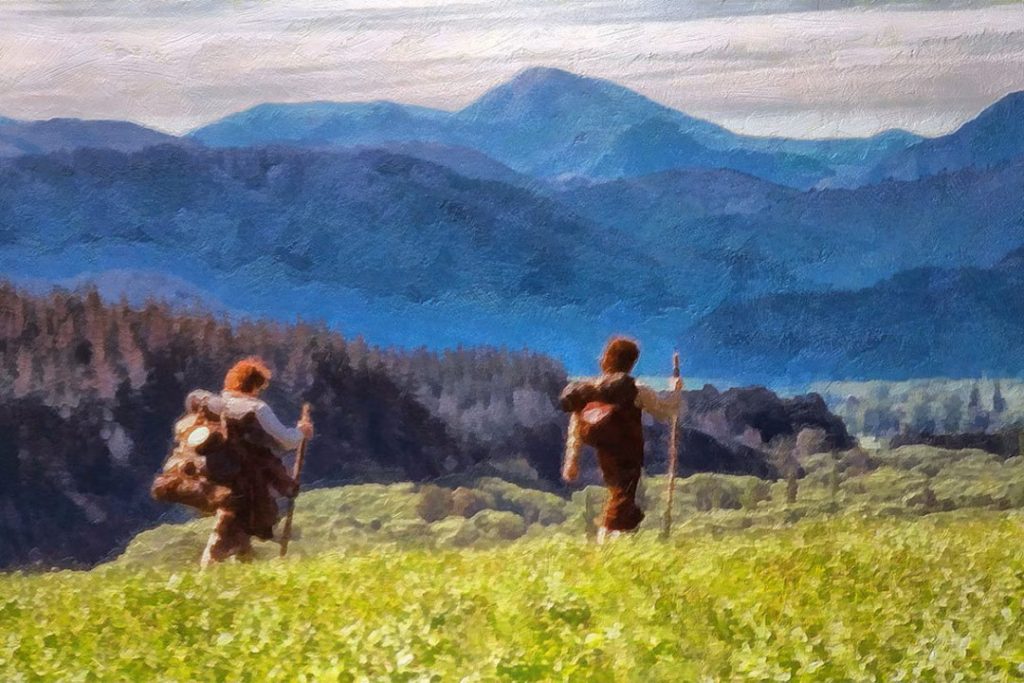
Travel is not just the bit between the tavern and the dungeon.
It is where the world gets to breathe.
It is where the players see smoke on the horizon before reaching the burning village. It is where they hear rumours before they meet the monster. It is where old choices catch up with them, where strangers become allies, where horses refuse to continue, where the bard makes another worrying decision, and where the party slowly realises that the map was never the territory.
Handled badly, travel becomes a commute with rations.
Handled well, it becomes anticipation, pressure, character, consequence, and wonder.
You do not need to account for every blister, every muddy boot, every bowl of stew, or every suspiciously damp bedroll. You just need the road to matter. Let it reveal something. Let it cost something. Let it offer a choice. Let it show the players that the world does not sit still while they are walking through it.
Because the destination is only part of the story.
Sometimes, the best adventure is what happens while everyone is still trying to get there.

Looking for something else to read? You’re going to need some NPCs for that big road trip; check this article out.